Hypnosis & Your Subconscious: Rewiring Who You Learned to Be
October 20, 2026
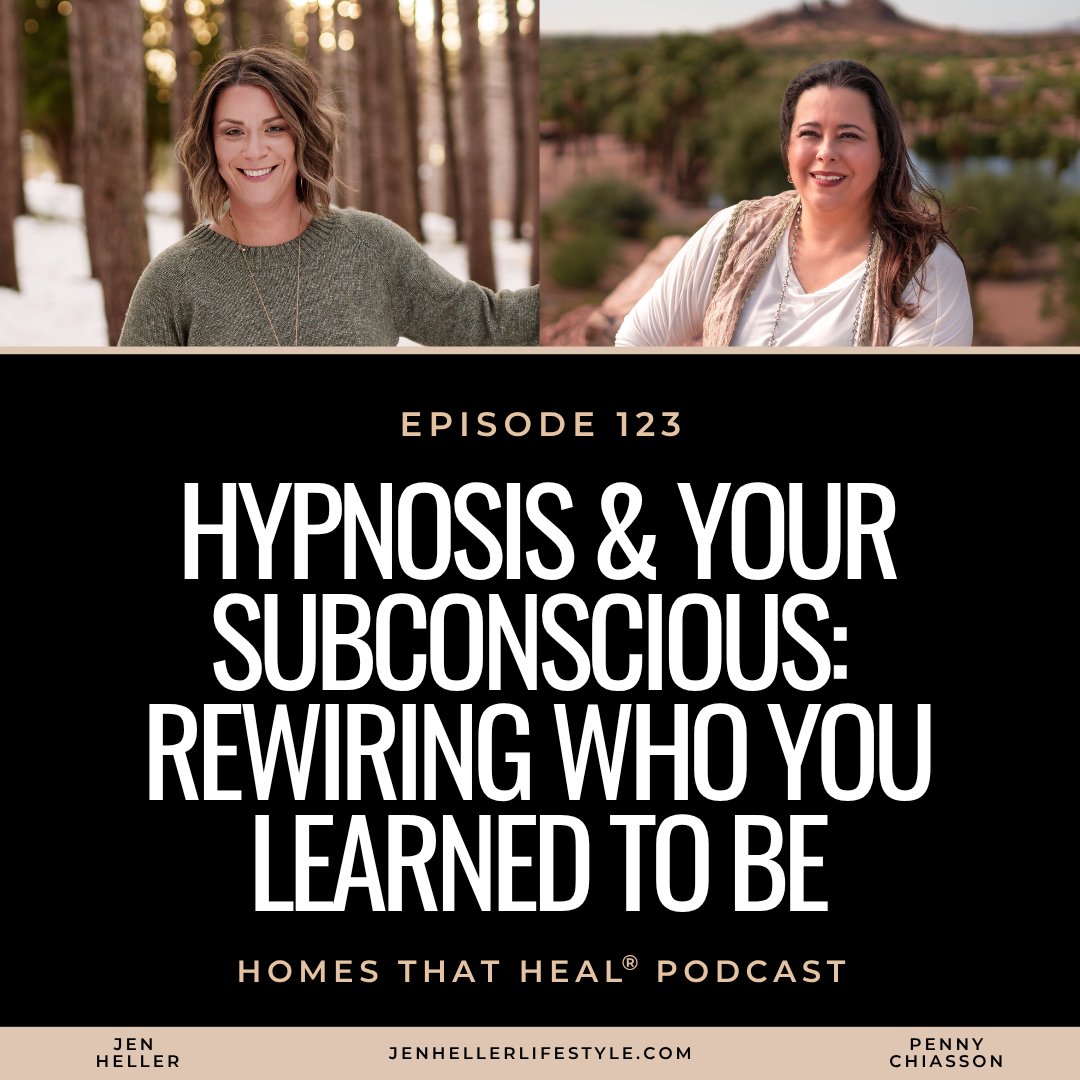
When I was a kid, my grandma always said I was mischievous. If something was broken or missing, her go-to explanation was “Jennifer did it.” I was a free-spirited, fearless little girl, so to be fair, she wasn’t always wrong. But it took me years to realize how much that one word had followed me into adulthood. That’s exactly the kind of thing my guest this week, Penny Chiasson, helps people uncover. She’s a board-certified hypnotist, and our conversation about hypnosis and the subconscious has had me looking at my own stories in a whole new light.
Full disclosure, I’ve been a Penny fan for years. We met at a retreat a while back, where she guided a room of 80 or 90 women through a hypnosis session. The minute she started talking, I got goosebumps, and before long I was sitting on the floor crying without knowing why. Something in me was ready to let go, and her voice gave it permission. So when I finally got her on the show, I had a long list of questions.
Meet Penny Chiasson
Penny spent 25 years in healthcare, including 10 as an ICU nurse and 15 as a nurse anesthetist. In other words, she spent a good chunk of her career putting people under. After a serious medication incident at her hospital, she wanted to share what she’d learned about pain management with other nurses. While building a course for them, she found a large body of research on hypnosis for pain.
That research stuck with her for years. Eventually, she signed up for a hypnosis training taught by a retired nurse anesthetist, mostly out of curiosity and to earn continuing education credits. Then, on day five, she was called to the front of the class for a demonstration. Under hypnosis, the instructor snapped a surgical clamp onto the back of her hand. It left marks for hours, and she never felt a thing. She called her husband on the way home and told him she was opening a hypnosis practice.
How Hypnosis and the Subconscious Work Together
If the word “hypnosis” makes you picture a stage show and someone quacking like a duck, you’re in good company. That’s what I pictured the first time I heard about it, too. Back then, most people only used hypnosis to quit smoking or change a habit. Today, more and more people are using it for something deeper, like finding peace with their past or understanding why they keep tripping over the same obstacles.
According to Penny, we slip into hypnotic states all the time, whether we’re glued to a screen or hanging on every word of a story someone we love is telling. When we’re paying that kind of rapt attention, the subconscious soaks up whatever comes in. And the subconscious can’t always tell the difference between what’s real and what’s imagined, because it processes in pictures and context. It doesn’t always connect the dots the way our logical brain would.
That’s where hypnosis and the subconscious meet. Hypnosis gives you a way to reach the part of your mind that’s been running the show in the background, so you can look at old beliefs with fresh eyes.
Who You Learned to Be
According to Penny, we come into this world with one expectation: to be loved and protected. Everything else, we learn. From the moment we’re born, the subconscious starts building our identity, mostly around a sense of safety and security. By around age seven, when the analytical mind comes online, a whole subconscious identity is already in place.
Your Subconscious Starts Taking Notes Early
Kids learn who to be at home. They notice what earns praise and what draws criticism, and they pick up cues from the adults around them without anyone saying a word. If Mom panics every time she sees a spider, her child may grow up afraid of spiders too, even if that child was never scared on their own.
The same thing happens with bigger beliefs. Penny once worked with a highly successful client who kept hitting a wall with money. Together they traced it back to a childhood memory of her parents talking about wealthy neighbors, saying they couldn’t be good people if they had that much money. The trouble was, those neighbors’ daughter was her best friend. Her young mind decided that wanting money, or even loving people who had it, might cost her love at home. It sounds illogical, and it is. But that’s how the subconscious works.
The Labels We Carry
Sometimes it’s as subtle as a label. Maybe you were the shy kid, and you’ve been living like the shy kid ever since, even though part of you wants to speak up. Penny explained that once we believe a label, we tend to follow patterns that reinforce it. Then the label starts to feel like the truth.
For me, it was “mischievous.” When Penny asked whether that label was a good thing in my grandma’s eyes, the answer was obvious. So, without realizing it, I learned that being bold and curious might get me in trouble. The more inner work I do, the more I see how much those little moments shaped me.
Why Trauma Doesn’t Have to Be Big
When most of us hear the word “trauma,” we picture something huge, like an accident or a loss. Penny sees it differently. To her, trauma is anything so emotionally intense that a young mind can’t make sense of it in the moment.
She shared a story about a client in her sixties who was struggling with imposter syndrome before a career move. In a session, the client went back to a memory of being three years old, stacking wooden blocks on the floor. Her mom sat down to play and took the tower apart to build it a different way. There was no ill intent at all. Still, that little girl decided in that moment that she’d done it wrong and that her mom must not love her. She carried that belief for most of her life, until that session helped her see it.
It reminded me that no matter how hard we try as parents or aunties, we can’t control how a child’s mind interprets things. What we can do is keep our hearts open and help them make sense of their world.
Identity Is Only the Halfway Point
Realizing you can change your identity is a huge step, but Penny calls it the halfway point. The next step is choosing an identity that isn’t built around expectations you’ll never meet.
She uses the example of “I am a mom.” When she asks clients for their stories about being a good mom, she usually hears about self-sacrifice and overwhelm. So instead, she might guide them toward something like “I am present.” From there, they can still be a mom who shows up for her kids, without locking themselves into a role that wears them out. As Penny put it, there’s no point in creating a new identity if you’re just building yourself another cage.
What Your Home Teaches the Subconscious
On this show, we talk all the time about how our space affects our sleep and stress levels. Hypnosis and the subconscious belong in that conversation too, because a home teaches a child what to expect from the world.
Our brains are wired to survive or thrive, and they thrive on predictability. When a home is chaotic, the mind is constantly trying to figure out who it needs to be today to stay safe. Many of the adults Penny has worked with who struggle with anxiety and hypervigilance grew up in unpredictable homes. Clutter plays a role too. Even when you’re focused on a conversation, your brain is still filtering everything your eyes and ears take in, so a cluttered room keeps your mind working overtime.
Why a Calm Home Can Feel Uncomfortable at First
My niece Morgan lived with us for about a year and a half, and she came from a very chaotic living situation. Our home is the opposite. We live on acreage, surrounded by nature, with lots of windows and natural light, and everything in the house has its place.
At first, the calm threw her off. She’d stand in our kitchen, look at all that open counter space, and ask where she could make a sandwich. Anywhere, I’d tell her. Anywhere! She even described herself as uncomfortable being comfortable.
Penny had a name for it right away: being addicted to chaos. When your brain has only known chaos, a calm space can register as unfamiliar, and unfamiliar can feel like a threat. That’s one reason people repeat old patterns, even ones that don’t feel good. Over time, with a home that felt safe and people who weren’t going anywhere, Morgan settled in and found her footing. Watching her grow into herself has been a gift.
Small Ways to Start Rewriting Your Story
You don’t need to overhaul your life this weekend to start working with your subconscious.
First, get curious about your labels. Think about what you were called as a kid and how it might still be steering you today. Next, if calm feels strangely uncomfortable, try Penny’s tip of saying out loud every day, “I am safe when [your ideal outcome] is happening.” Repetition like this may help your brain learn that good things aren’t a threat.
At home, start with predictability. Regular mealtimes and a set day for taking out the trash give your nervous system something steady to lean on. Then clear the clutter in the spots your eyes land most often, like the kitchen counter or your nightstand. And if you’re ready to go deeper, consider working with a trained, ethical hypnotist who stays within their scope and knows when to bring in other support.
Breaking the Fibro Code
Penny is also the #1 international bestselling author of Breaking the Fibro Code. She wrote it after several clients told her their fibromyalgia symptoms eased after doing emotional work together. Her message reaches beyond fibromyalgia to other chronic conditions she connects to long-term stress. She’s careful not to promise a cure, but she wants readers to know there’s something they can do about it.
Back when I ran my wellness center, fibromyalgia was one of the diagnoses I heard about most. And nearly every conversation ended the same way: “I know something else is going on.”
You Get to Choose Who You Become
Who you learned to be is only the first draft. The labels and beliefs you picked up as a kid made sense at the time, and they can be rewritten. And a home that feels safe and peaceful gives that work room to stick.
About Penny Chiasson
Penny Chiasson spent 25 years in healthcare, including 15 as a nurse anesthetist, before walking away to help people create lasting change at the subconscious level. She’s a board-certified hypnotist and the #1 international bestselling author of Breaking the Fibro Code. She also created The Identity Matrix™, and as founder of Elite Hypno Pro™, she trains practitioners to rewire the subconscious and create change that sticks. On The Soul Fusion Podcast, she has real conversations about identity and becoming who you are underneath who you learned to be.
Links & Resources
- Follow Penny on Instagram
- Visit Penny’s website: pennychiasson.com
- Find Penny on Facebook
- Take a peek at my Jen Recommends list to see more of my favorite products.
- Grab my FREE Home Wellness Checklist here for more tips.
Be the first to know about my new favorite wellness tools, special deals, and more, subscribe to our newsletter!
Disclaimer: This podcast is for general information purposes only and does not constitute the practice of medicine, nursing, or other professional health care services. The statements and views expressed are not medical advice and are not meant to replace the advice of your medical doctor. This podcast, including Jen Heller and her guests, disclaims any responsibility and any adverse effects you may experience from the specific use of the information contained herein. The opinions of guests are their own and this podcast does not endorse or accept responsibility for the statements made by guests. The content of this podcast is not intended to be a substitute for professional medical advice, diagnosis, or treatment. If you think you have a medical condition, consult your licensed physician.


