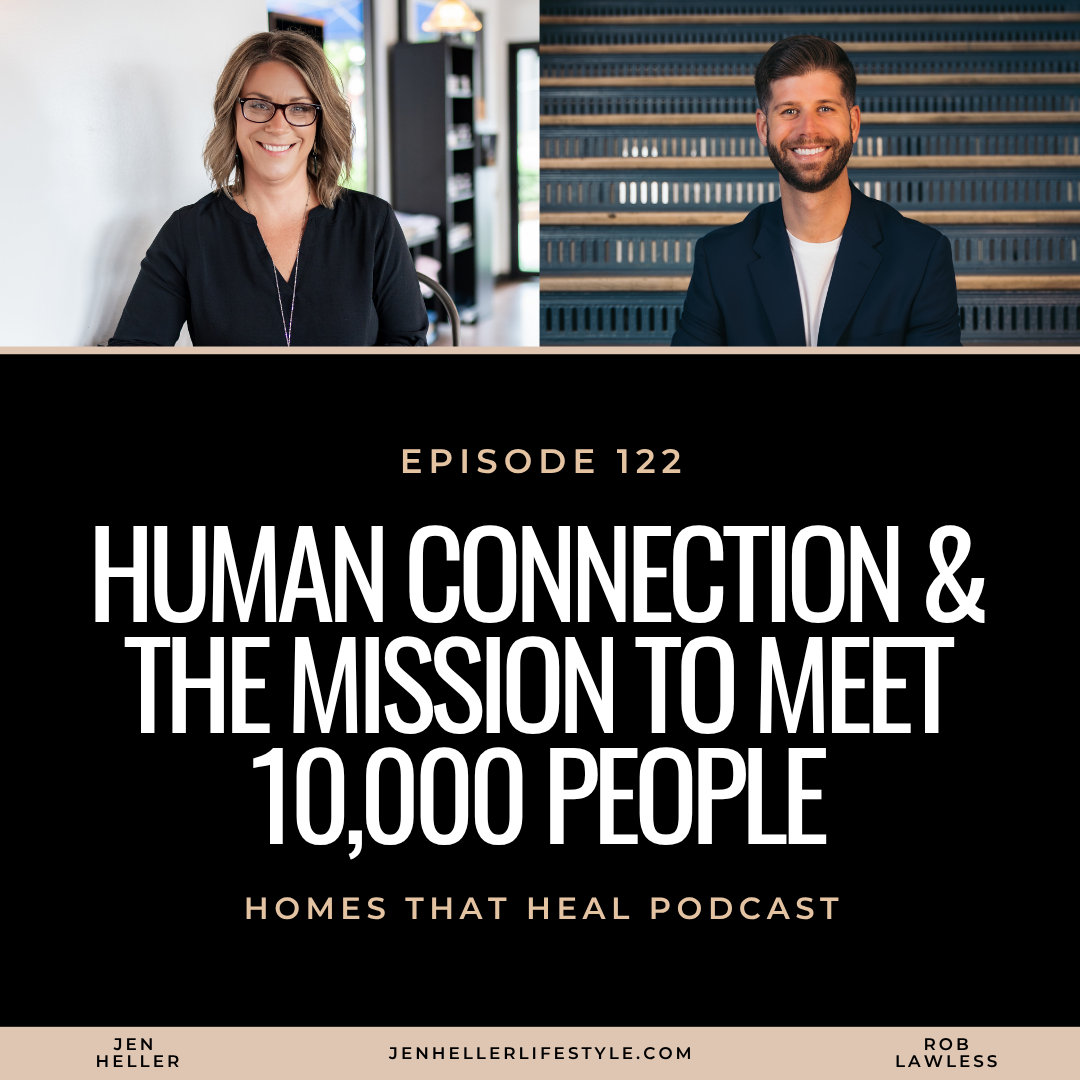
Quick question, friends: when’s the last time you made a brand-new friend? If you had to think about it for a while, you’re not the only one. Human connection has gotten weirdly hard for grown-ups, and my guest Rob Lawless has spent the last decade doing something about it.
Rob’s goal is to spend one hour, one-on-one, with 10,000 different people. So far, he’s met more than 7,700 of them in over 90 countries. I got to be number 7,719, and I’ve never been so excited to be a number.
Why Human Connection Gets Harder After School
Think back to high school or college. You didn’t have to try very hard. Friends just sort of happened because you shared the same hallways with the same people every single day.
Then real life shows up with a desk, a commute, and a calendar full of obligations. Suddenly, the only new faces you see are the ones in the Zoom squares.
That’s exactly what happened to Rob. At Penn State, he was surrounded by 40,000 students and loved that he never ran out of new people to meet. A year after graduation, he was sitting in a corporate consulting cubicle, lonely and disconnected, wondering how he’d survive 40 more years of it.
So Rob set a goal he admits was almost too daunting for any sane person to pursue. He decided to meet 10,000 strangers. His first plan was 10 minutes each, which he’ll happily tell you was a terrible idea. The final version, a full hour with every person, was so strange that people wanted in.
Human Connection Works Best When You’re Not Selling Anything
When Rob started emailing strangers in Philly, his pitch was simple. He had nothing to offer except that as his network grew, theirs would grow with it.
Years later, one guy admitted he’d been sure it was a multilevel marketing scheme. He kept waiting for the catch. It never came, and once people figured that out, they started introducing Rob to their friends. As Rob puts it, “our souls have lie detectors for authenticity.”
I see that every day. Technically, I sell infrared saunas, yet I don’t think of myself as a salesperson. I’m a wellness educator, and my whole business grew from asking people real questions and listening to what they said back. After 15-plus years, I can tell you people can smell a sales pitch from a mile away.
Nobody Has It All Figured Out
Rob’s biggest lesson from 7,700 conversations is my favorite line in the whole episode: “No one really knows what they’re doing with their lives.”
The people who look like they have it all together are simply the ones brave enough to raise their hand. Everyone else is doing the best they can with what they’ve got.
That makes comparison culture on social media even sillier. We scroll through everybody’s highlight reel, feel lousy about our own lives, and then keep following the accounts that made us feel lousy. Rob’s reminder is refreshingly simple. You’re in charge of your feed.
He’s also not buying the idea that you have to post the messy stuff to be real online. When his family went to Disney World, his parents didn’t put the crying photos in the album. They used the good ones. “You don’t owe people content about your life,” he told me.
Is Technology Making Human Connection Worse?
Rob thinks so, at least for now. We went from phone calls to texts to comments. Then a pandemic kept us apart, and now some folks are using AI as a therapist or a friend. He does believe the pendulum will swing back eventually. It just might swing a little further first.
Meanwhile, loneliness shows up in the body, too. In 2023, the U.S. Surgeon General’s advisory on loneliness linked poor social connection to a higher risk of heart disease and stroke. It also reported that isolation may raise the risk of early death to a level comparable to smoking every day. In other words, human connection belongs on your wellness list right next to clean water and good sleep.
Why We Stay Stuck in What Feels Safe
Rob and I bonded over walking away from corporate jobs that looked great on paper. I spent 14 years in corporate HR, and I loved my people. Still, something was missing. When I told my family I was leaving, they thought I’d lost my mind.
For Rob, the breaking point was predictability. His career path was mapped out for decades, and a great year couldn’t fast-track him. “I already knew how the movie was going to go,” he said, “so I didn’t see the point in watching it.”
So why do so many of us sit in a job, or a relationship, that’s draining us dry? From everything I’ve learned, our nervous systems tend to pull us back toward what feels safe and familiar, even when familiar isn’t good for us. A known discomfort just feels easier than an unknown one.
Getting Comfortable with Uncertainty
Rob got laid off from his sales job at a tech startup in 2016 and took it as his cue to go all in on the project. For the next few years, he bounced between Los Angeles, his parents’ house, and a friend’s place in Hoboken. He had no idea where he’d live in three months. Somehow, every new conversation gave him enough fuel to keep going, and today he says he’s “become best friends with uncertainty.”
Full disclosure, I’m wired the same way. If I’m catching a flight tomorrow, I’m packing tonight, and I’ll roll into the airport with a smidge less time than I probably should. My husband, on the other hand, wants to know our gate the day before. Figuring out how we’re each wired has saved us from starting more than one vacation mad at each other at the airport.
How to Build Human Connection in Any Conversation
Rob keeps a simple tool in his back pocket that works on pretty much anyone. He calls it the FRIEND Framework, and each letter points to a topic: family and relationships, industry, entertainment, and needs and dreams.
Family and relationships cover the people in someone’s life. Industry is their education and career, and entertainment is whatever they do for fun. Needs and dreams cover where they hope to go and what they need to get there.
He thinks of every person’s life as a timeline. You’re learning who someone was, who they are now, and who they want to be. So when a conversation starts to fizzle, he runs through the list in his head and finds the area he hasn’t touched yet.
His secret weapon is asking grown adults what music they listened to in high school. We were all teenagers once, hanging out in our bedrooms with a favorite album on repeat, and that one question takes people right back there.
Simple Ways to Practice Human Connection This Week
- Before your next coffee date or family dinner, pick one of Rob’s FRIEND topics and ask a question you’ve never asked that person.
- Ask someone what they listened to in high school, then let them talk.
- Clean up your feed by unfollowing any account that leaves you feeling worse about your own life.
- Reach out to someone whose story interests you, even if you’ve never met. That’s how Rob and I got started, in an Instagram DM.
Don’t Save Your Dreams for the End
Rob and I recorded this conversation right after I got home from three weeks at Hippocrates Health Institute in West Palm Beach. While I was there, I met a retired nurse who had worked in hospice for years. One day, floating in the pool, she told me what she heard most from people near the end of life. They wished they’d chosen a different career, lived a different life, or chased the dreams they never had the courage to try.
She took that to heart. When she retired, she sold her home and hit the road so she wouldn’t miss a thing.
Rob lives by his own version of that. Some of his favorite musicians, documentaries, and books came from people he met through the project. He’d be downright annoyed to reach the end of his life and find out he missed something he would have loved, all because he was too nervous to say hi.
You Don’t Need a 10,000-Person Goal
Someday, Rob would love to teach a college course on human connection, where first-year students pair off every class and learn from each other’s stories. Picture someone 20 years from now saying they met their spouse or business partner in that class. I’d sign up tomorrow.
For the rest of us, one real conversation this week counts. Ask a better question, listen a little longer, and see who shows up in your life because of it.
About Rob Lawless
Rob Lawless is a keynote speaker and the creator of Rob’s 10K Friends, a mission to spend one hour, one-on-one, with 10,000 different people. After studying finance at Penn State, he worked in corporate consulting and in sales for a tech startup before setting out to get back to real human connection. Since November 2015, he’s met more than 7,700 people from over 90 countries. After a layoff in June 2016, he took the project full time. Today, he speaks to audiences about the untapped value of human connection and inspires people to make more room for it in their own lives.
Links & Resources
- Rob’s website: roblawless.com
- Download Rob’s FRIEND Framework
- Rob’s 10K Friends
- Rob on Instagram and LinkedIn
- Take a peek at my Jen Recommends list to see more of my favorite products.
- Grab my FREE Home Wellness Checklist here for more tips.
Be the first to know about my new favorite wellness tools, special deals, and more, subscribe to our newsletter!
Disclaimer: This podcast is for general information purposes only and does not constitute the practice of medicine, nursing, or other professional health care services. The statements and views expressed are not medical advice and are not meant to replace the advice of your medical doctor. This podcast, including Jen Heller and her guests, disclaims any responsibility and any adverse effects you may experience from the specific use of the information contained herein. The opinions of guests are their own and this podcast does not endorse or accept responsibility for the statements made by guests. The content of this podcast is not intended to be a substitute for professional medical advice, diagnosis, or treatment. If you think you have a medical condition, consult your licensed physician.


