
Nervous System Regulation for Burnout Recovery
June 30, 2026
Have you ever pushed yourself so hard, for so long, that your body just stopped talking to you? Not in a dramatic, collapse-on-the-floor kind of way, but in a quieter, scarier way. You’re still functioning, still showing up, still checking the boxes, but somewhere along the way you lost the ability to feel much of anything. That’s what happens when nervous system regulation breaks down. It’s what my guest this week, JD Tremblay, lived through on the most extreme end imaginable.
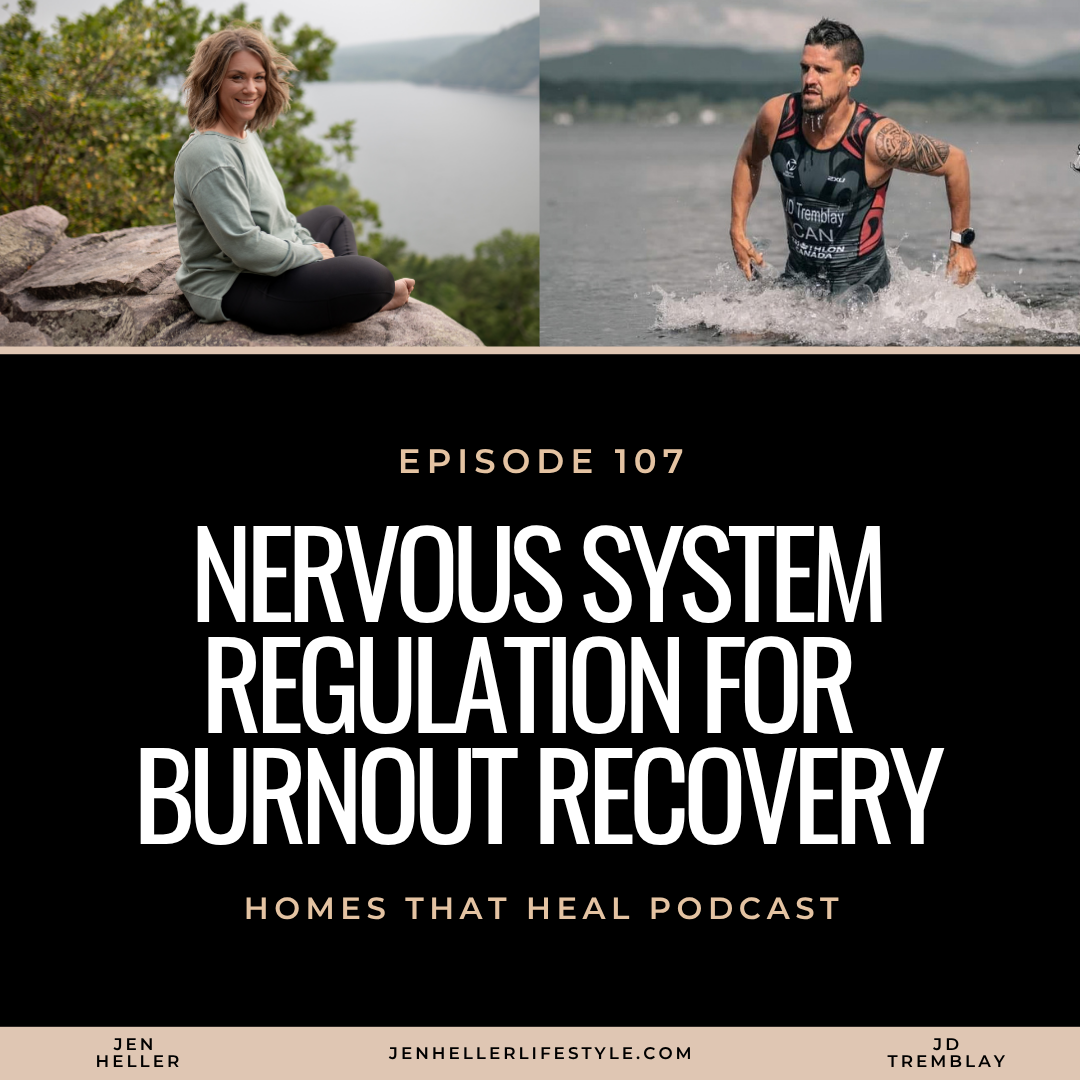
JD is an ultra-endurance athlete, certified naturopath practitioner, and one of only three people in the entire world to complete something called the Epic Deca—ten consecutive Ironman-distance races, back to back, island to island, with barely any sleep in between. He sold his house to race, so he could cover the entry cost and get his support crew to Hawaii, with flights, lodging, and food for everyone along the way. He slept in his car for over a year afterward. And through all of it, his body eventually had to teach him something his mind refused to learn on its own: you can ignore the warning signs for only so long before your body forces the recovery you didn’t choose for yourself.
I love conversations like this one because they take a concept we talk about a lot on this show—nervous system regulation—and show you what happens when it’s completely ignored. JD’s story is extreme, sure. Most of us aren’t racing across Hawaiian islands with no sleep. But the pattern underneath it? That’s painfully familiar to a lot of high achievers, caretakers, and anyone who’s been running on empty for so long they’ve forgotten what “full” even feels like.
What Is Nervous System Regulation?
At its core, nervous system regulation is your body’s ability to move fluidly between states of stress and states of rest. Your nervous system is supposed to ramp up when you need it—say, during a workout, a tough conversation, or a deadline—and then come back down once the demand has passed. That coming-back-down part is the regulation piece, and it’s the part most of us skip entirely.
JD’s coach saw this coming long before JD did. After watching JD swim a 400-meter set with zero signs of struggle, his coach pulled him aside and told him to get out of the pool. Not because JD couldn’t handle the workout physically, but because the coach had seen this exact pattern before in other athletes, and he knew where it led. He told JD plainly that if he kept pushing without building in recovery, there was a real chance his nervous system would crash so completely that he’d never come back to the sport again.
JD heard him. He kept training anyway, and finished out the rest of his races for the year.
The Body Keeps Score Even When You’re “Fine”
What makes JD’s story so striking is that nothing about him looked broken from the outside. His mind was sharp. He had no diagnosed injuries. He kept finishing races, kept hitting new personal records, kept showing up to start lines all over the world. But underneath that performance, something had quietly shifted.
He described reaching a point where he had no physical sensation in his body at all. Not numbness from an injury, but a full disconnection. He could go from a cold shower to a hot one and not register the temperature difference either way. He once sat in a cold plunge pool for over twenty minutes without feeling a thing, to the point where someone nearby assumed he must be training for something, when really, he just couldn’t feel that he needed to get out.
This is the part of nervous system regulation that doesn’t get talked about enough. We tend to picture burnout as exhaustion. However, for a lot of high performers, it shows up as the opposite: an eerie, sustained numbness that lets you keep going long after your body has been begging you to stop.
The Moment Everything Clicked
JD’s turning point didn’t happen during a race. It happened in the ocean, of all places, with a pool noodle under his arms.
After finishing his sixteenth Ironman of the year, his body in visible pain, he finally agreed to take two weeks off and flew to Florida with his dad. While floating in the ocean alongside other vacationers, some of whom had significant health conditions, he realized he was moving slower and feeling weaker than people around him who weren’t training for anything at all. Here he was, the guy who’d completed the Epic Deca, and he couldn’t keep pace with people on pool noodles.
That was the marker. It’s when it finally landed that something needed to change, not in his training plan, but in how he understood recovery altogether.
Why High Achievers Are Especially Vulnerable
This pattern shows up again and again in people who look completely fine on the outside. You see them in the gym, in the boardroom, in their families, looking strong and capable and put together. But internally, their nervous system has been stuck in a constant state of high alert for so long that the wiring itself starts to misfire. The neurons stop communicating the way they should, and the body simply stops sending the warning signals it used to rely on.
JD described watching this happen in other high performers too. People who are seemingly never sick, never slowed down, mentally sharp and physically capable, right up until the moment their body simply decides it’s done. Sometimes it shows up the second they finally slow down, the classic getting-sick-the-day-vacation-starts pattern, and other times it’s far more sudden. Either way, the warning signs were almost always there long before the collapse. They just weren’t loud enough, or the person wasn’t in a place to hear them.
That’s part of why nervous system regulation matters so much. You can eat clean, work out, fine-tune every corner of your life, and still be operating from a deeply dysregulated state if recovery was never part of the equation. JD found this out the hard way when he sat for a five and a half hour tattoo session and felt nothing the entire time. The artist, who’d been doing this for years, told him he’d never tattooed anyone who didn’t feel pain unless they were on medication or drugs. JD wasn’t. His nervous system had simply gone quiet.
What Recovery Really Looks Like
So what does JD do now, after rebuilding his relationship with his own nervous system? It’s refreshingly simple. He meditates daily, a minimum of twelve minutes, which research has shown is roughly the threshold needed to begin shifting the nervous system out of a stress state. Some days that looks like quiet, unstructured stillness. Other days it looks like what he calls active meditation, which can be as simple as a slow walk where you’re moving but still present enough to hold a conversation.
He also talks openly about the role faith and surrender played in his recovery, the idea that you can’t white-knuckle your way into regulation. At some point, you have to let your body rest instead of just telling it to.
The Takeaway
JD’s story is extreme, and that’s exactly what makes it such a clear teacher. He had every external marker of health, and it still wasn’t enough to keep his nervous system from quietly shutting down underneath all of it. For JD, that meant facing the uncomfortable truth that his identity had been built entirely around performance, and that healing required him to value rest as much as he’d always valued output.
You probably don’t need to sell your house or sleep in your car to learn this lesson. But if you’ve been pushing through exhaustion and calling it discipline, if you’ve gone numb to your own limits because acknowledging them felt like weakness, this conversation is worth sitting with. Nervous system regulation isn’t a luxury you earn after you’ve proven yourself. It’s the thing that makes everything else possible.
Give this episode a listen. JD’s full story has even more layers than what’s covered here, including how a faith-driven sense of purpose carried him through some of the hardest seasons of his life, and how he’s now helping other men recognize the same patterns in themselves before they hit a breaking point.
Meet JD Tremblay
JD Tremblay is an integrated engineer, ultra-endurance triathlete, certified naturopath practitioner, and best-selling author. With over a decade of military service and experience in firefighting and search and rescue, he brings a rare depth of lived experience to the topics of resilience and performance under pressure. As one of only three people in the world to complete the Epic Deca, JD now helps men regulate their nervous systems and build lasting, high-level performance through his program, Hungry Warrior Academy.
- Connect with JD Tremblay at hungrywarrioracademy.com.
- Rate JD’s speaking and grab his free resource here.
Resources
- Take a peek at my Jen Recommends list to see more of my favorite products.
- Grab my FREE Home Wellness Checklist here for more tips.
- The newsletter is where I get a little more personal. If you’re not on the list yet, come join us.
- Join the Jen Heller Collective Waitlist
Disclaimer: This podcast is for general information purposes only and does not constitute the practice of medicine, nursing, or other professional health care services. The statements and views expressed are not medical advice and are not meant to replace the advice of your medical doctor. This podcast, including Jen Heller and her guests, disclaims any responsibility and any adverse effects you may experience from the specific use of the information contained herein. The opinions of guests are their own and this podcast does not endorse or accept responsibility for the statements made by guests. The content of this podcast is not intended to be a substitute for professional medical advice, diagnosis, or treatment. If you think you have a medical condition, consult your licensed physician.


