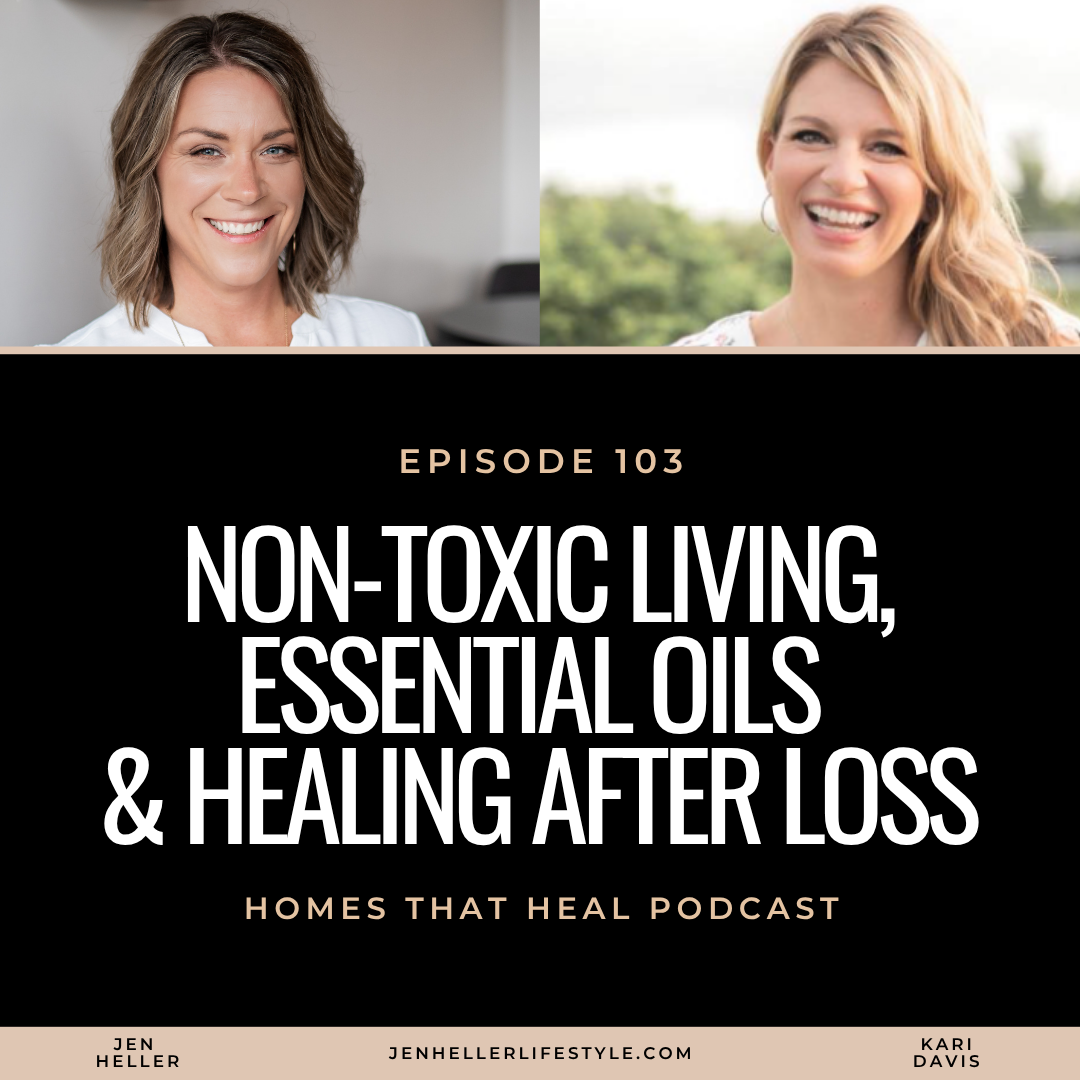
If you’ve ever built a non-toxic home with your whole heart and then watched life walk in and make a mess of it anyway, this one is for you. Kari Davis lost her husband suddenly at age 38, with three young kids and a non-toxic home full of essential oils she was about to lean on in ways she never imagined. Because here’s something nobody tells you about building a wellness-centered home: it doesn’t make you immune to hard things. What it does is give you tools for when they arrive. And in this conversation, Kari shares exactly how those tools—her faith, her knowledge of essential oils for grief, and her commitment to natural living—carried her family through the hardest season of their lives.
Meet Kari Davis of The Well Team
Kari Davis has been in the wellness world for a long time—long enough to remember when non-toxic living meant people looked at you sideways in the grocery store and your kids complained about having different toothpaste than the other children at sleepovers. She came to essential oils through a friend when she had a sick kid on a beach vacation, and a deep, nagging sense that there had to be a better way.
What started as a curiosity about plant-based wellness quickly became a calling. Kari dove headfirst into the science of essential oils, the biblical roots of plant medicine, and the connection between a non-toxic home environment and whole-body health. By 2015, she had built a thriving doTERRA business, a home she was proud of, and a wellness practice rooted in faith and natural living.
And then, on an ordinary Saturday afternoon, her husband passed away suddenly. She was 38 years old with three children—ages 4, 9, and 11—and a life that had just changed completely.
Essential Oils for Grief: What Kari Discovered in Her Hardest Season
Kari had spent years building a non-toxic, wellness-centered home. She had the oils, the clean products, the knowledge. Then the most toxic thing imaginable walked through her front door anyway. Sudden loss. Unimaginable grief. Three kids sobbing in their beds at night.
And yet, those tools she had spent years gathering? They showed up for her family in ways she hadn’t expected.
That year, Kari learned to use essential oils for grief in a way she had never explored before. She had always understood the physical benefits—immune support, sleep, everyday wellness. But in the aftermath of loss, she found herself turning to oils like Forgive, Cypress, and grounding blends rooted in deep-rooted trees and fresh grasses. The science made sense to her on a new level: scent is the only sense with a direct pathway to the brain’s emotional center. When words failed and grief felt impossible to process, the oils were quietly doing their work.
She’s careful to say it wasn’t a cure. Grief doesn’t work that way and she’d be the first to tell you so. But for a mom trying to hold herself together while holding space for three grieving kids, having tools that supported emotional regulation—naturally, without side effects—mattered more than she can fully put into words.
Creating a Non-Toxic Home Environment for Kids Through Trauma
One of the things Kari reflects on with real honesty is how hard it was to parent through grief while also staying true to her wellness values. Her husband had been the Slurpees-and-McDonald’s parent. She was the organic vegetables and homemade cleaning supplies parent. Suddenly, she was the only parent and acutely aware that she didn’t want her kids to feel like they’d gotten the boring one.
So she made some grace-filled adjustments. She loosened her grip on the non-toxic rules just enough to meet her kids where they were emotionally. She picked her battles. And she kept doing the things that felt grounding and healing for all of them—the oils, the clean home, the faith, the Aromatouch massages that her youngest would literally line up for on the massage table.
What she created, even if it didn’t feel like enough at the time, was a home environment rooted in safety, sensory calm, and love. And that, as I told her during our conversation, is exactly what a healing home looks like.
The Emotional Power of Essential Oils Most People Never Explore
Most people who come to essential oils start where Kari and I both did—the medicine cabinet makeover. Swap the synthetic stuff for something cleaner. Support your immune system. Sleep better. And that’s a great place to start.
But there’s a whole other dimension to essential oils for grief and emotional wellness that doesn’t get nearly enough airtime. Scent bypasses the thinking brain entirely and lands directly in the limbic system, the part of your brain that processes emotion and memory. This is why certain smells can take you back to your grandmother’s kitchen in an instant, or why lavender on your pillow actually changes how you sleep.
For Kari, oils like Frankincense—with its small molecules that cross the blood-brain barrier—became tools for emotional regulation during an impossible season. Grounding blends with deep root systems and tree-based oils helped her and her kids feel anchored when everything felt uncertain. And the Forgive blend, designed around plants associated with release and renewal, became something she reached for again and again.
This isn’t woo-woo. It’s plant science meeting human biology at exactly the right moment.
Faith, Non-Toxic Living, and Finding Your Way Back
Something Kari said in our conversation has stayed with me. She talked about how losing her husband could have made her angry at God—and how, instead, it deepened her faith. She had made $800 that month through her doTERRA business without even realizing she had built something. The timing, the provision, the tools already in her hands—she couldn’t see it as anything other than grace.
That intersection of faith and non-toxic living is something Kari carries into her coaching work through The Well Team. She’s not preachy about it—her words, not mine, and I appreciated her for saying it. But if you’re open to exploring how faith and wellness weave together, she’s a deeply grounded guide for that conversation.
Today, Kari has remarried, blended two families, and built a coaching practice and podcast—The Well: Health and Wholeness—that helps women reclaim their lives through natural living, self-care, and rediscovering who they are. She’s proof that a non-toxic home is about so much more than what’s under your kitchen sink.
What You Can Take Away From This Episode
Whether you’re in a hard season right now or just building your wellness toolkit for whenever one comes, here are a few things worth sitting with after this conversation.
Essential oils for grief are a real and science-backed tool—not a replacement for counseling or community, but a genuinely supportive addition to your healing environment. If you haven’t explored the emotional side of your oil collection, this episode is a great place to start.
A healing home doesn’t have to be perfect. Kari’s home during those years wasn’t a Pinterest-worthy wellness sanctuary. It was a real home with real grief in it, held together by a mom doing her best with the tools she had. That counts.
Grace and flexibility are part of non-toxic living too. Kari gave herself and her kids room to breathe, and that grace was its own kind of medicine.
About Kari Davis
Kari Davis is the founder of The Well Team and a certified holistic life coach and essential oils educator. She is passionate about helping women reclaim their lives by redefining self-care, finding wellness, and rediscovering their identity through a natural, non-toxic lifestyle. After being widowed at age 38, Kari created a life she could love again—and now helps other women do the same. She lives in Naples, Florida with her husband Bobby and their combined five children.
- Website: www.thewellteam.com
- Instagram: https://www.instagram.com/karidavis_thewell/
Resources
- Take a peek at my Jen Recommends list to see more of my favorite products.
- Grab my FREE Home Wellness Checklist here for more tips.
- The newsletter is where I get a little more personal. If you’re not on the list yet, come join us.
Disclaimer: This podcast is for general information purposes only and does not constitute the practice of medicine, nursing, or other professional health care services. The statements and views expressed are not medical advice and are not meant to replace the advice of your medical doctor. This podcast, including Jen Heller and her guests, disclaims any responsibility and any adverse effects you may experience from the specific use of the information contained herein. The opinions of guests are their own and this podcast does not endorse or accept responsibility for the statements made by guests. The content of this podcast is not intended to be a substitute for professional medical advice, diagnosis, or treatment. If you think you have a medical condition, consult your licensed physician.


