Toxic Homes, Chronic Stress & Healing Spaces: A Story of Survival
May 26, 2026
In 2014, Antoinette Berrafato (f.k.a. Antoinette Lee) was dying. Not metaphorically—physically. She hadn’t eaten in six weeks, doctors were preparing for her fifth surgery, and one night she looked down at herself in her bed and could smell death in her own body. Antoinette wasn’t afraid or panicking. She was just exhausted, and she knew her time was running out. What she discovered next, that her home may have been quietly working against her recovery all along, is one of the most powerful toxic home and healing spaces stories I’ve ever heard.
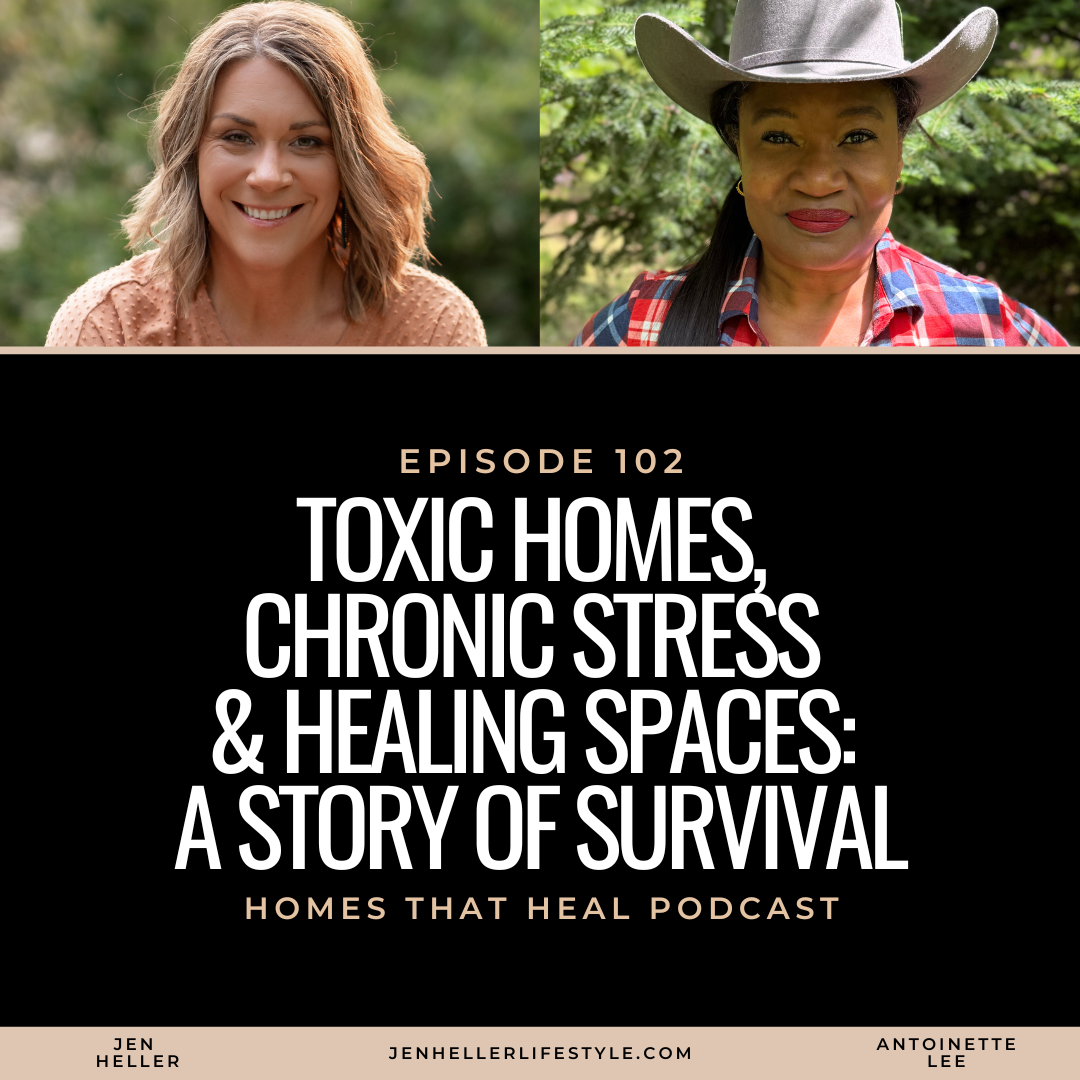
In Episode 102 of Homes That Heal, Army veteran and resilience life coach Antoinette Berrafato walks us through what happened, what she changed, and how you can start creating a home that supports your healing. No matter where you’re starting from.
Meet Antoinette Berrafato (f.k.a.Antoinette Lee)
Antoinette Berrafato (f.k.a. Antoinette Lee), MBA, is an 11-year U.S. Army veteran, resilience life coach, motivational speaker, health and wellness columnist, and founder of the American Adventure Sports Club nonprofit. As the creator and host of the New Normal Big Life podcast, she helps people define their own “new normal” and step boldly into the biggest life they can dream. After rebuilding her life following a traumatic brain injury, spine injury, PTSD, and years of chronic illness, what she’s built on the other side is nothing short of remarkable.
From a Toxic Home to a Cabin in the Northwoods
When Antoinette hit rock bottom in 2014, she was living in a 900 square foot luxury condo—the kind of address everyone in the tech world wanted. It was spotless. A friend once told her it looked like a museum. But something was deeply, quietly wrong.
At the time, she had a full-time caregiver, a service dog, and a walker. For 18 months, she hadn’t left her home. She was on 20 medications, and despite doing everything conventional medicine told her to do, she kept getting sicker.
That night, instead of calling her caregiver, she made a quiet promise. Give me one more day, and I’ll find out why I’m so sick. Then I’ll turn around and help other people.
So she went inward. She pulled out the journals she’d been keeping for years and started looking for patterns—what she was doing when she felt well, and what was happening when she didn’t. What she found pointed directly at her environment.
The fresh paint was off-gassing. Synthetic cleaning products and artificial fragrances were adding to her toxic load. And her nervous system, already in overdrive from years of military service, had nowhere inside those four walls to rest and recover.
Within 90 days of making those changes, including eventually moving to a cabin in the Northwoods, she went from bedridden to whitewater kayaking. No more walker. No more caregiver. Zero medications, down from twenty.
How a Toxic Home Environment Affects Your Nervous System
Most of us think about health in terms of food, sleep, and movement. But we rarely stop to consider what our home is doing to our nervous system hour after hour, day after day.
Antoinette describes her condo as a space that kept her in a constant low-grade state of fight-or-flight. The off-gassing from paint and synthetic products was adding to her toxic load, and the visual weight of her space, even though it was technically organized, was creating what she calls cognitive overload. Her senses were constantly processing everything around her, and her nervous system simply couldn’t keep up.
This is more common than most people realize, and it doesn’t require a dramatically cluttered or obviously toxic home to happen.
Signs Your Space May Be Contributing to Chronic Stress
- You feel tense or unsettled when you walk in the door instead of relieved
- You struggle to fall asleep or stay asleep, even when you’re exhausted
- You feel foggy, low-energy, or irritable at home more than anywhere else
- Your space is visually busy, even if it’s technically “organized”
- You regularly use synthetic fragrances, conventional cleaning products, or plug-in air fresheners
None of these are a verdict. They’re an invitation to look a little closer.
The Light, Order & Life Approach to Healing Spaces
After Antoinette moved to the Northwoods, her recovery accelerated in ways she hadn’t anticipated. The approach she developed from that experience is now at the core of her coaching work. She calls it Light, Order, and Life, and it’s refreshingly practical.
Light and Your Healing Home
Natural light does more than brighten a room. It supports your circadian rhythms, lifts your mood, and signals safety to your nervous system. Antoinette went from a condo with heavy curtains and blocked windows to a cabin flooded with light from every direction, and the difference was immediate.
You don’t have to move to the woods to feel that shift. Start by clearing what’s blocking your windows, and spend time in natural daylight each morning. As the evening falls, dim your lights gradually to help your body begin winding down naturally.
Order and Reducing Cognitive Load
Most people picture clutter as stacks of old newspapers or laundry piled on a chair. But Antoinette’s condo was immaculate, and it was still quietly overwhelming her senses. Something on every wall, something in every corner. All of it creating what she calls cognitive overload, a constant background hum her nervous system couldn’t sustain.
True order means reducing the cognitive load your space places on you, so your brain can rest when you walk through the door. Start small—one room, one drawer, one corner. Give away anything you haven’t used in a year, let your space breathe, and notice how your nervous system responds.
Life: Bringing the Outdoors In
The third piece is about reconnecting to the natural world, both inside your home and outside it. Antoinette brought in plants, nature photography in handmade frames, crystals, and a simple tabletop water feature. She also swapped synthetic candles for essential oils: lavender to wind down at night, orange to wake up in the morning, and antimicrobial herbs to clean the air naturally.
Beyond the home itself, she made time outside non-negotiable. Walking barefoot in the grass for grounding, swimming in natural bodies of water to absorb magnesium, and foraging in state and federal parks—a practice that costs as little as $5 for a pass and is far more accessible than most people think.
Even in an urban setting, Antoinette has a simple suggestion: find a tree. The phytoncides released by trees have been shown to support mood, activate immune cells, and help reduce stress. Five minutes under a tree on your way to or from wherever you’re going genuinely counts.
Practical Steps to Start Creating a Healing Home Today
You don’t need to sell your condo and move to the woods. Here’s where to begin, no matter your budget or zip code.
Swap out synthetic fragrance. Replace plug-ins, conventional candles, and artificial air fresheners with essential oils or fresh air. This single swap can meaningfully reduce your daily toxic load.
Work on reducing cognitive load, one space at a time. If something doesn’t bring you peace, support your healing, or serve a real purpose, let it go. Donate it, gift it, release it.
Maximize natural light wherever you can. Move furniture away from windows, open your blinds first thing in the morning, and try to get outside in natural daylight for at least ten minutes each day.
Bring nature inside in small ways. A plant, a water feature, a bowl of rocks from places you’ve been. Natural materials and living things shift the energy of a space in ways that are hard to explain but easy to feel.
Give your bedroom one job: rest. Cool-toned paint, dimmable lights, essential oils, and screens off before bed. Your bedroom should send one clear signal to your nervous system—it is safe to rest here.
And get outside, even briefly. Ground in the grass. Stand under a tree. If you can get to a park or natural area, even better. Nature was here before pharmacies, as Antoinette puts it, and returning to it is one of the most healing things you can do.
Your Home Should Be Working For You
Antoinette’s story is about one decision: to stop surviving and start designing a life that supports healing. That decision didn’t require money, a perfect plan, or ideal circumstances. It started with a single question—How do I want to feel?—and one deliberate step forward from there.
Our homes do more than hold our things. They shape how we feel, how we recover, and how we show up in the world every single day. And the good news is that you can start shifting that today, regardless of your budget, your square footage, or where you’re starting from.
Antoinette Berrafato (f.k.a.Antoinette Lee) Bio
Antoinette Berrafato (f.k.a.Antoinette Lee), MBA, is an 11-year U.S. Army veteran, resilience life coach, motivational speaker, health and wellness columnist, outdoor industry influencer, and founder of the American Adventure Sports Club nonprofit. After rebuilding her life following a traumatic brain injury, spine injury, PTSD, and years of chronic illness, she now helps others define their own “new normal” and step boldly into the biggest life they can dream. She is the creator and host of the New Normal Big Life Podcast.
- Website: https://newnormalbiglifepodcast.com
- Instagram: https://www.instagram.com/nnblpodcast
- YouTube: https://www.youtube.com/@NewNormalBigLife
Resources
- Take a peek at my Jen Recommends list to see more of my favorite products.
- Grab my FREE Home Wellness Checklist here for more tips.
- The newsletter is where I get a little more personal. If you’re not on the list yet, come join us.
Disclaimer: This podcast is for general information purposes only and does not constitute the practice of medicine, nursing, or other professional health care services. The statements and views expressed are not medical advice and are not meant to replace the advice of your medical doctor. This podcast, including Jen Heller and her guests, disclaims any responsibility and any adverse effects you may experience from the specific use of the information contained herein. The opinions of guests are their own and this podcast does not endorse or accept responsibility for the statements made by guests. The content of this podcast is not intended to be a substitute for professional medical advice, diagnosis, or treatment. If you think you have a medical condition, consult your licensed physician.


