
The Hidden Toxins in Your Cleaning Products (and What to Use Instead)
January 13, 2026
If you’ve ever finished cleaning your kitchen, stepped back, and thought, “Why does this smell so intense?” you’re not imagining things. More people are starting to question what’s actually in the products they use every day, and that curiosity is fueling a growing interest in non toxic cleaning. Not as a trend, but as a practical way to support health at home without overcomplicating life.
For years, the wellness conversation centered on organic food, clean beauty, and filtered water. Meanwhile, the cleaning products under our sinks—used daily, inhaled regularly, and left behind on the things we touch—rarely got the same scrutiny. That’s beginning to change, and once you start paying attention, it becomes clear why this shift matters.
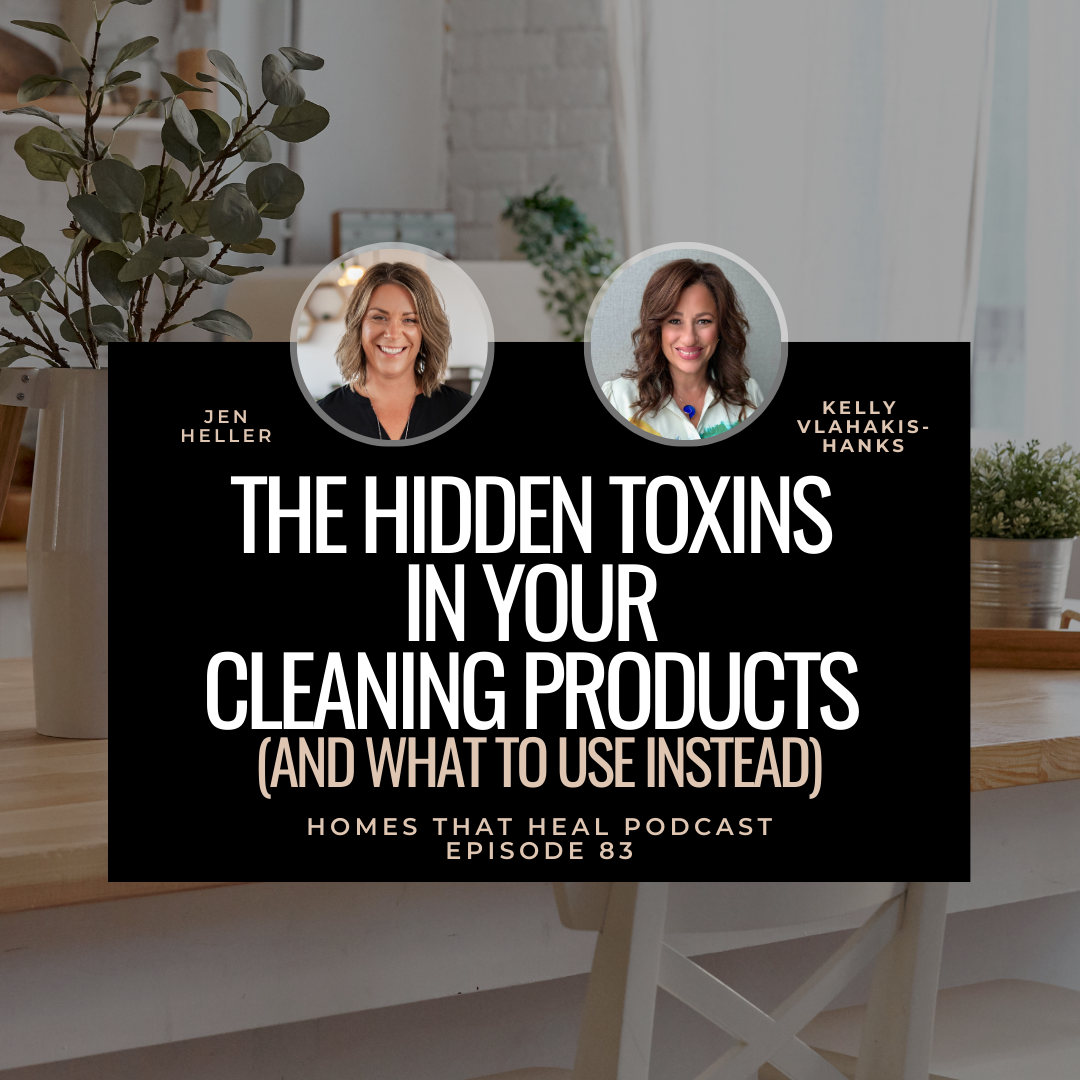
This episode of Homes That Heal explored the hidden toxins in everyday cleaning products with Kelly Vlahakis-Hanks, CEO of ECOS and a longtime leader in safer, more transparent cleaning. With decades of experience inside the industry, Kelly offered a rare behind-the-scenes look at how these products are made, why the ingredients matter, and what healthier, effective alternatives can look like in real homes.
Why Cleaning Products Have Flown Under the Radar
Most people assume that if a product is sold in a store, someone has verified that it’s safe. That assumption holds true in some categories, but cleaning products operate in a very different regulatory landscape.
In the U.S., manufacturers are not required to fully disclose all ingredients used in cleaning products, nor are they required to test those products for long-term human health effects before they hit the shelves. That means substances that would raise eyebrows in food or personal care often go unquestioned in household cleaners.
This doesn’t mean every conventional product is dangerous. It does mean that clean doesn’t automatically equal healthy, and that understanding what surrounds us inside our homes deserves more attention than it’s historically received.
The Reality of Hidden Toxins in Everyday Cleaning
When people hear the word “toxins,” it can sound dramatic. In reality, the issue with many cleaning products isn’t acute exposure—it’s cumulative exposure.
Common concerns include:
- Undisclosed fragrance blends
- Residual byproducts created during manufacturing
- Ingredients associated with respiratory irritation or skin sensitivity
- Artificial dyes that add nothing beyond appearance
These substances don’t usually cause immediate symptoms. Instead, they contribute to a background level of exposure that the body quietly manages day after day. Over time, that constant processing can become a burden—especially for children, pets, or anyone with sensitivities.
This is where non toxic cleaning becomes less about alarm and more about reduction. Fewer unnecessary ingredients. Less chemical noise. More breathing room for the body.
Why “Clean” Smells the Way It Does
One of the strongest conditioning points around cleaning is scent. Sharp, lingering smells have been marketed as proof that something is working. But scent is not a measure of effectiveness; it’s a sensory cue.
Artificial fragrance is one of the most common contributors to indoor air pollution and is frequently linked to headaches, respiratory irritation, and skin reactions. Even products labeled “fresh” or “lightly scented” can release compounds that linger long after cleaning is done.
A non toxic clean tends to smell subtle or like nothing at all. When scent is present, it usually comes from thoughtfully used essential oils rather than synthetic fragrance designed to overpower.
Non Toxic Cleaning and Indoor Air Quality
Indoor air quality plays a much bigger role in health than most people realize. Studies have shown that indoor air can be significantly more polluted than outdoor air, especially in homes that rely heavily on sprays, disinfectants, and fragranced cleaners.
Each time these products are used, microscopic particles are released into the air. Over time, they accumulate, creating an environment the body must constantly respond to, even during rest.
Switching to safer cleaning products is one of the simplest ways to support cleaner indoor air. It’s not flashy, but it’s foundational, particularly for households with kids, pets, or anyone with asthma or allergies.
Where Non Toxic Cleaning Makes the Most Sense to Start
Trying to change everything at once often leads to overwhelm. The good news is that non toxic cleaning works best when approached strategically.
Laundry: A High-Impact First Step
Laundry products are often the most logical place to begin. Clothes, towels, and sheets sit directly against the skin for hours at a time. Any residue left behind doesn’t just stay on fabric; it transfers to the body.
People dealing with eczema, rashes, or unexplained skin irritation frequently notice improvement after switching laundry products. Reducing prolonged skin contact with harsh ingredients can make a meaningful difference.
Dishes and Glassware: What You Don’t See Still Matters
Dish soap and dishwasher detergent are another important category. Even trace residue left on plates and glasses becomes part of daily ingestion. Choosing gentler products here supports both physical health and peace of mind—especially for families already prioritizing high-quality food.
Floors and High-Touch Surfaces
Floors, counters, and doorknobs are part of everyday life. Pets nap there. Kids crawl there. Hands move from surface to face without a second thought. Using non toxic cleaning products in these areas reduces exposure without sacrificing cleanliness.
The Truth About Dyes and “Visual Clean”
Bright blue liquids and neon green sprays are designed to communicate power. But color doesn’t clean.
Artificial dyes are added purely for appearance. They don’t improve performance, and they don’t make a product safer. In non toxic cleaning, every ingredient should serve a purpose. When something exists solely to look “active,” it’s worth questioning why it’s there at all.
Simpler formulas are often the most effective and the easiest for the body to tolerate.
What to Look for Instead
Avoiding harmful ingredients is only half the conversation. People also want to know what actually works.
Modern, safer cleaning products are not the ineffective options many remember from years past. Advances in formulation mean plant-based surfactants and thoughtfully chosen ingredients can clean thoroughly without compromising indoor air or leaving behind harsh residues.
When evaluating alternatives, look for:
- Transparent ingredient lists
- Third-party certifications that verify safety
- Products that clean without overpowering scent
- Brands with a long-term commitment to transparency, not trends
The goal isn’t perfection. It’s choosing products that align with health, effectiveness, and values.
Non Toxic Cleaning as Part of a Bigger Picture
A home that supports health doesn’t rely on a single change. Nutrition, sleep, movement, and stress management all play important roles. But those efforts are more effective when the environment isn’t quietly adding friction.
Non toxic cleaning reduces the background load the body has to manage. Instead of constantly compensating for exposure, the body has more capacity to maintain balance.
This is why cleaning products deserve a seat at the wellness table—they influence daily life more than most people realize.
A Gentle Reframe: Progress Over Perfection
If this conversation feels new, that’s okay. Awareness often arrives before action. There’s no need to overhaul an entire home overnight.
Non toxic cleaning works best when it’s gradual:
- Replace products as they run out
- Start with one room or category
- Focus on the items used most often
Each small change adds up. Over time, those choices create a home that feels calmer, cleaner, and more supportive, without adding stress or complexity.
The Takeaway
The hidden toxins in cleaning products aren’t about fear; they’re about awareness. Once the conversation opens, it becomes easier to make informed choices that support health in quiet, consistent ways.
Non toxic cleaning isn’t flashy. It doesn’t demand attention. But it does change the feel of a home over time—cleaner air, calmer skin, and fewer unnecessary exposures.
And that’s exactly what a home that heals is meant to offer.
Kelly Vlahakis-Hanks Bio:
As President and CEO of ECOS plant-powered cleaning products, Kelly Vlahakis-Hanks is passionate about human and planetary health. She leads four manufacturing facilities across the U.S. as well as a European manufacturing platform. She is widely recognized for her highly effective leadership at ECOS and her influential voice in corporate social responsibility, safer chemistry, and sustainable manufacturing.
Vlahakis-Hanks led ECOS to become a Climate Positive company in 2021 after achieving carbon neutrality, water neutrality, and TRUE Platinum Zero Waste certification. ECOS is also the first manufacturer to receive LEED® Zero certifications in net-zero energy, carbon, and waste. The company has received many awards for its innovations in safer green chemistry, including the U.S. EPA’s Safer Choice Partner of the Year eight times.
As a woman of African American and Greek descent, Vlahakis-Hanks has made environmental and social justice a cornerstone of ECOS’s mission. She actively promotes a corporate culture of diversity and empowerment; 60% of her C-Suite and top executives are women and 40% are BIPOC. She is proud to lead a company that is a WBENC-certified women-owned business and an NMSDC-certified minority-owned business.
Vlahakis-Hanks supports the green economy by creating sustainable manufacturing jobs across the U.S. and offering excellent wages and family-friendly benefits. She also offers financial incentives to employees who make sustainable living choices, such as buying a low-emissions vehicle or solar panels.
- Ecos Website: ecos.com
- Learn more about Kelly: www.ecos.com/meet-kelly-vlahakis-hanks/
- Instagram: www.instagram.com/kellyfromecos/?hl=en
- LinkedIn: www.linkedin.com/in/kellyvlahakishanks/
Resources
- Ecos products on Amazon, along with the new laundry sheets and foaming dish spray
- Take a peek at my Jen Recommends list to see more of my favorite products.
- Grab my FREE Home Wellness Checklist here for more tips.
Be the first to know about my new favorite wellness tools, special deals, and more, subscribe to our newsletter!
Disclaimer: This podcast is for general information purposes only and does not constitute the practice of medicine, nursing, or other professional health care services. The statements and views expressed are not medical advice and are not meant to replace the advice of your medical doctor. This podcast, including Jen Heller and her guests, disclaims any responsibility and any adverse effects you may experience from the specific use of the information contained herein. The opinions of guests are their own and this podcast does not endorse or accept responsibility for the statements made by guests. The content of this podcast is not intended to be a substitute for professional medical advice, diagnosis, or treatment. If you think you have a medical condition, consult your licensed physician.


