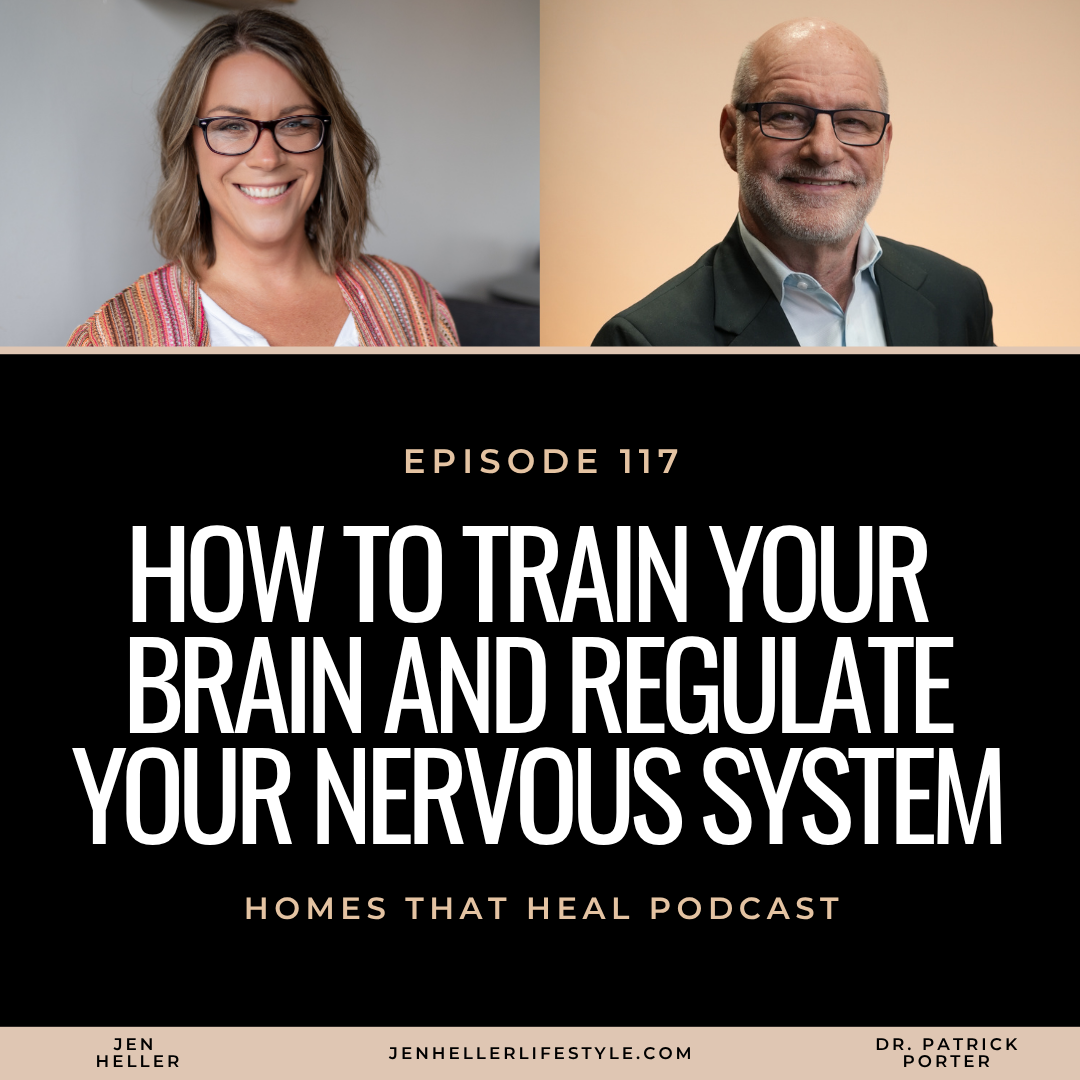
We spend so much energy taking care of the body: stretching it, feeding it, walking it, supplementing it, and (most nights) getting it to bed at a decent hour. Meanwhile the organ running the whole operation, the one deciding whether we feel calm or frazzled, sharp or foggy, rested or wired, mostly gets left to fend for itself. That was true for me for years, until life gave me a very good reason to pay attention. On this week’s episode of Homes That Heal, I sat down with Dr. Patrick Porter to talk about how you can train your brain the same way you’d tend to anything else you love, with the right inputs, a little consistency, and some help from light and sound.
Full disclosure: I’m not coming at this as a casual observer. A stroke that paralyzed my left side rerouted my entire understanding of what the brain can and can’t come back from. Learning to train my brain became part of how I found my way home to myself.
Meet Dr. Patrick Porter
Dr. Patrick Porter has spent more than thirty years studying how the brain moves between stress and calm, and he’s the founder of BrainTap, a light-and-sound tool that guides the brain toward more restful states. His work is used by over 120,000 people and thousands of wellness clinics, and his latest book, Brain Fitness Blueprint, breaks brain health down into something the rest of us can use day to day. What I love about Patrick is that he doesn’t make it woo or complicated. He makes it doable.
Why “Just Relax” Rarely Works
Patrick’s team has scanned tens of thousands of brains. Out of all of them, only a tiny handful of people could settle into a calm, meditative state on their own. If you’ve ever been told to “just relax” or “just meditate” and felt like a failure when your mind kept sprinting, consider this your permission slip. It isn’t a character flaw. For most of us, the brain doesn’t know how to get there without a little guidance.
We keep the furnace serviced, the water heater flushed, the filters swapped right on schedule. The one system running every second of our lives, we mostly leave to sort itself out. Nobody handed most of us a manual for our own nervous system.
The fix starts one level down, with the gears your mind shifts through all day long.
The Gears Your Brain Runs In
Your brain runs on brainwaves, and those waves move through a handful of states depending on what you’re doing. Beta is your busy, awake, get-it-done mode. Alpha is that relaxed, daydreamy calm. Theta shows up in deep meditation and creativity. Delta is the slow, restorative wave of deep sleep. When stress takes over, we tend to camp out in the high-beta, fight-or-flight zone and struggle to climb back down. Light and sound, Patrick explains, can gently nudge the brain toward the slower waves, which is why a ten-minute session can feel like someone hit a reset button on your whole nervous system. Once you understand the states, you stop fighting your brain and start working with it, guiding yourself toward calm instead of trying to bully your way there.
What It Means to Train Your Brain
For a long time, we believed the brain you were born with was pretty much the brain you were stuck with. Research on neuroplasticity has flipped that idea on its head. Your brain can form new pathways, strengthen the good ones, and adapt in response to what you feed it, at more or less any stage of life. Neurons that fire together, as the saying goes, wire together.
So when you train your brain with steady, calming inputs, you aren’t just having a pleasant moment. You’re laying down new wiring, one session at a time.
After my stroke, relearning to use my left side wasn’t about forcing anything. It came down to repetition, patience, and giving my brain the right conditions to rebuild the connections it had lost. Progress showed up in small, unglamorous increments, the kind you almost miss day to day and only notice when you look back over months. Neuroplasticity in real life looks less like a lightning bolt and more like that. It’s available to all of us, not only after a medical scare.
Your Brain Runs on Energy
Patrick describes something he calls brain voltage, the simple idea that your brain needs a certain amount of energy to run well. When that energy dips, focus slips, moods sink, and sleep gets shaky. Seen that way, the goal isn’t relaxation for its own sake. It’s keeping your brain charged and resourced so it can do its job well, from remembering where you left your keys to staying patient with the people you love.
How Your Home Helps You Train Your Brain
Naturally, we couldn’t do a Homes That Heal episode without talking about your home. Your brain doesn’t operate in a vacuum. It’s soaking up your environment all day long: the air you breathe, the light you sit under, the clutter in your sightline, the invisible hum of signals from your devices. Patrick and I talked about how a cluttered, noisy, chemical-heavy home keeps your nervous system on low-grade alert, which makes every other brain-supporting habit harder.
Cleaner air, more natural light, fewer synthetic materials, and a little distance between your bed and your Wi-Fi router at night all give your brain a calmer baseline to work from. You can do all the brain work in the world, but if your space is fighting you, you’re swimming upstream the entire time. Your home, though, is one of the few variables you fully control, and small changes there tend to pay off everywhere else.
Small Habits That Add Up
None of this has to be a big, intimidating overhaul. The people who see real change are the ones who stack tiny, repeatable habits until they become second nature.
Simple Ways to Train Your Brain
Start smaller than you think. A few quiet minutes a day, done consistently, will do more than the occasional hour-long marathon. Consistency is how you train your brain, the same way reps build a muscle.
Give your brain a shortcut. Guided light-and-sound sessions, like the ones Patrick built into BrainTap, help the brain find the slower, calmer waves it struggles to reach alone. If a device isn’t your style, a simple guided audio meditation can get you moving in the right direction.
Guard your sleep like it’s sacred, because for your brain, it is. Deep, delta-wave sleep is when your brain does its nightly housekeeping. A dark, cool, screen-free wind-down tells your nervous system it’s finally safe to rest.
Clean up the inputs. Open a window, clear the clutter where your eyes land most, and put a little space between your bed and your devices overnight. Tiny shifts, real difference.
Mind the story you keep replaying. Patrick and I got into how the brain will loop on old stress if you let it. Gently reworking that inner narrative, on purpose, is part of the work too.
Coming Back to Yourself
Your brain is not a fixed, finished thing. It’s listening, adapting, and fully capable of change, even after the hard chapters. I know that firsthand. You are far more in the driver’s seat of your own health than you’ve been led to believe, and choosing to train your brain is one of the kindest things you can do for the years ahead. Small, steady, doable. That’s the whole game.
About Dr. Patrick Porter
Dr. Patrick Porter, PhD, is the founder of BrainTap and a longtime pioneer in brainwave training. For more than thirty years, he’s studied how light and sound can guide the brain into calmer, more focused states. His work is now used by over 120,000 people and 3,000-plus wellness clinics worldwide. He’s been featured everywhere from The Wall Street Journal to CNN to The Joe Rogan Experience. His latest book, Brain Fitness Blueprint, co-written with former Google wellbeing executive Ruchika Sikri, lays out a practical plan for everyday brain health.
Links & Resources
- Find Dr. Porter at drpatrickporter.com
- Try BrainTap free for 14 days.
- Grab his book, Brain Fitness Blueprint
- Take a peek at my Jen Recommends list to see more of my favorite products.
- Grab my FREE Home Wellness Checklist here for more tips.
Be the first to know about my new favorite wellness tools, special deals, and more, subscribe to our newsletter!
Disclaimer: This podcast is for general information purposes only and does not constitute the practice of medicine, nursing, or other professional health care services. The statements and views expressed are not medical advice and are not meant to replace the advice of your medical doctor. This podcast, including Jen Heller and her guests, disclaims any responsibility and any adverse effects you may experience from the specific use of the information contained herein. The opinions of guests are their own and this podcast does not endorse or accept responsibility for the statements made by guests. The content of this podcast is not intended to be a substitute for professional medical advice, diagnosis, or treatment. If you think you have a medical condition, consult your licensed physician.


