
Eczema, Psoriasis, & Natural Skin Healing: Plant-Based Remedies That Work
March 17, 2026
When was the last time you opened your medicine cabinet and really looked at what’s in there? Not just a quick grab-and-go moment before running out the door. I mean actually looked. Read the labels. Checked expiration dates. Paused long enough to ask yourself whether you’d truly want to put those ingredients on your skin. If you’re anything like me, the answer is probably: it’s been a while. That realization is where this conversation about natural skin healing began.
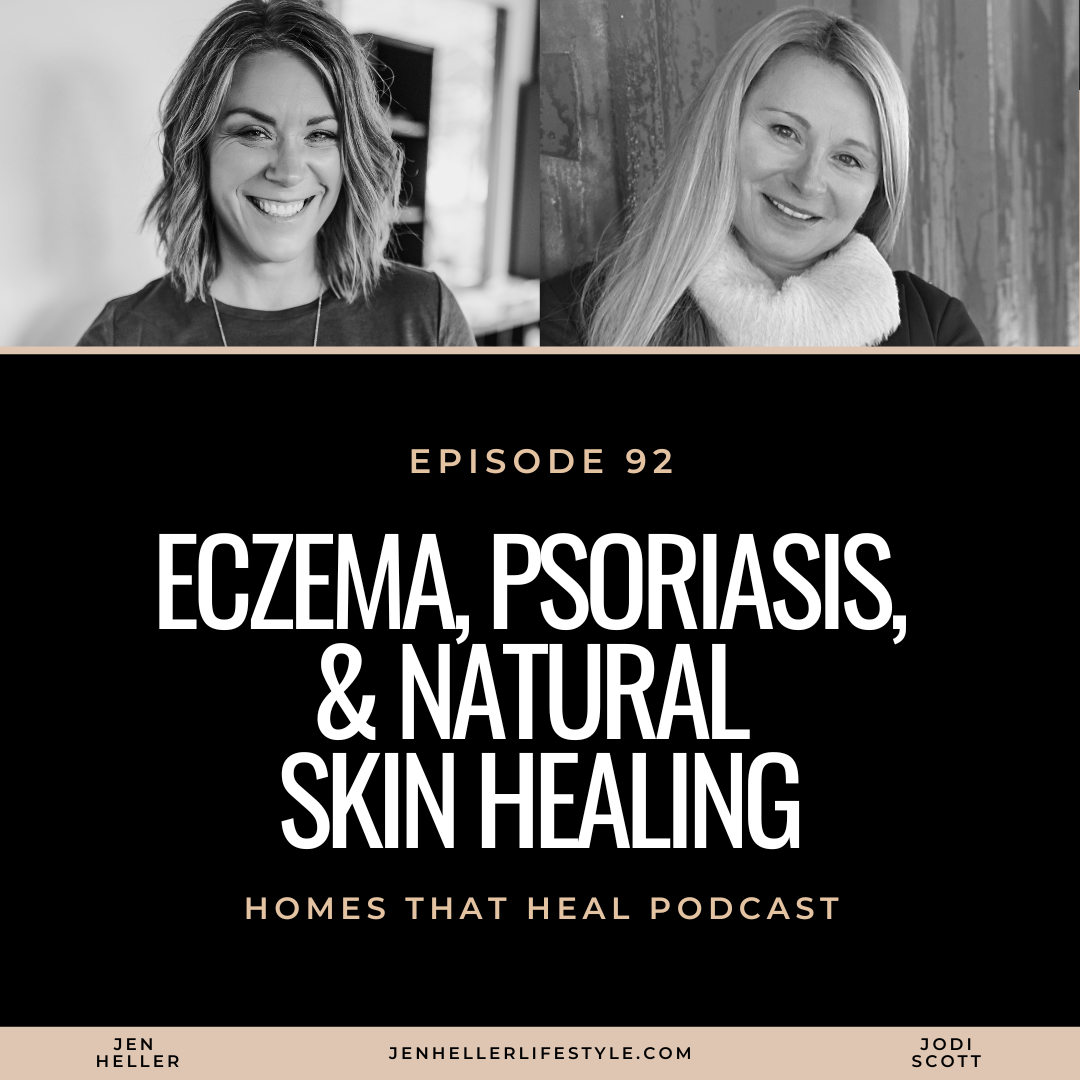
In this episode of Homes That Heal, I sat down with Jodi Scott, co-founder of Green Goo, to talk about natural skin healing, plant-based remedies, and why so many of us have been taught that conventional first aid products are the only real option when something happens to our skin.
Spoiler: they’re not.
And the story of how one family’s backyard herb garden turned into a natural first aid brand carried in more than 100,000 stores? It’s one of those stories that reminds you how powerful simple ideas can be when they’re rooted in purpose.
When a Label Makes You Pause
Jodi didn’t originally set out to start a skincare company. Her background is in health psychology, and she spent years training physicians in something called the biopsychosocial model—an approach that encourages doctors to see the whole person, not just the symptom in front of them.
So she was already thinking about health from a broader perspective.
Then she got pregnant.
One day she cut herself and reached into the medicine cabinet for a familiar tube of Neosporin. But this time, instead of using it automatically, she stopped and read the label.
And something about it made her pause.
She remembers thinking, I don’t want to put this on my body… and I definitely don’t want to put it on my baby.
So she looked around the cabinet again—really looked this time. Expired products, tubes she barely remembered buying, ingredients she had never questioned before. After a moment she simply closed the door.
Then she called her sister, who happens to be an herbalist and midwife, and asked a simple question that turned out to be pretty powerful: Why do we assume this is the only option for skin healing?
That question opened the door to something much bigger. The two sisters started exploring herbs, plants, and the body’s natural ability to repair itself. What they found was surprising. Many people who cared deeply about clean living were abandoning those values the moment a first aid situation popped up—simply because they had been taught that conventional products were the only effective option.
Instead of accepting that idea, Jodi and her family decided to test it.
That decision eventually became Green Goo.
From Backyard Herbs to a National Brand
What I love most about this story is how unpolished the beginning was. There were no fancy labs or big investors waiting in the wings. There were herbs drying on old screen-door racks in the backyard and mason jars of oils infusing slowly in the kitchen.
At one point the kitchen became so packed with herbs and oils that it stopped functioning as a kitchen altogether. The family had to set up their camping stove outside just to cook dinner.
But the process mattered to them.
Most commercial skincare products rely on plant extracts that have been processed with heat or chemicals until only a small fraction of the plant’s original properties remain. Jodi and her family wanted something different. They wanted to preserve the integrity of the plants themselves so the skin could receive the full benefit.
The philosophy was simple: give the body the right tools for natural skin healing, and then step back and let it do what it was designed to do.
A Simpler Way to Think About Natural Skin Healing
Something Jodi said during our conversation really stuck with me.
When they started creating products, their goal wasn’t to make more.
It was to make fewer things that worked better.
If you think about the average medicine cabinet, it’s often filled with single-purpose products—one cream for cuts, another for burns, something different for bug bites, and yet another tube for rashes. Before long you’ve got an entire shelf of products that all do slightly different things.
Jodi’s approach was to simplify. Instead of filling the cabinet with dozens of products, they focused on creating plant-based salves that support natural skin healing across many everyday situations.
Cuts, scrapes, bug bites, bee stings, chafing, blisters, sunburns—the little things that pop up in daily life.
And honestly, that idea resonated with me immediately.
During the episode I shared a story about a trip Mark and I took to North Carolina when I accidentally sat on a hidden hornet’s nest during a waterfall hike. Not one hornet. An entire nest.
Let’s just say that moment escalated quickly.
But it also reminded me how important it is to have first aid options you actually trust—especially when the nearest emergency room might be hours away.
When Natural Skin Healing Surprises Even Skeptics
One story Jodi shared during the episode really stayed with me.
A mom reached out about her five-year-old daughter who had been struggling with severe eczema for nearly a year. They had tried everything—over-the-counter treatments, prescription creams, steroid rotations—but nothing seemed to bring lasting relief.
The mom admitted she didn’t really believe natural products would work.
But she was exhausted and willing to try anything.
Jodi looked at photos of the child’s skin, talked through what was happening with inflammation, and suggested a simple plant-based routine. A week later the mom wrote back saying she was seeing improvements she hadn’t seen before.
Two weeks later the inflammation had calmed significantly.
Then came the message Jodi still remembers clearly: “I haven’t seen my daughter smile in a year. And we’re finally sleeping again.”
Stories like that are why Jodi continues to advocate for natural skin healing and plant-based care.
Your Skin Is More Connected Than You Think
Another part of our conversation completely reframed how I think about skincare.
Your skin isn’t just something people see. It’s your largest organ, and it’s deeply connected to your nervous system, immune system, and hormonal system. Throughout the day your skin is constantly responding to signals from the environment—temperature, stress, chemicals, even emotional states.
When your skin experiences stress or inflammation, those signals ripple through the body.
That’s why what we put on our skin matters more than most of us realize.
Many conventional products disrupt the skin microbiome or introduce synthetic ingredients that interfere with the body’s natural balance. Jodi uses a phrase I love: nutritive skincare.
Instead of seeing skincare as purely cosmetic, we begin to see it as part of our wellness practice.
A Ritual Called Sanctuary Sunday
One of my favorite moments in the entire episode was when Jodi shared something she does at home called Sanctuary Sunday.
Once a week she intentionally slows down and nourishes her skin. She might apply herbal salves or body balms, wrap herself in a robe, pour a cup of tea, and give herself 30 or 40 minutes of quiet presence.
No multitasking. No rushing.
Just letting her skin—and her nervous system—reset.
What she’s found is that when she creates that moment of intention once a week, she naturally becomes more present throughout the rest of the week as well. The small pauses during the day start to come back—stepping outside between tasks, noticing the water in the shower, feeling the ground under your feet.
Plants, presence, and purpose.
That’s the heart of natural skin healing.
The Takeaway
Your medicine cabinet might not seem like a big decision. But in many ways it reflects how we approach wellness in our daily lives.
Natural skin healing isn’t about rejecting modern medicine or chasing trends. It’s about remembering that our bodies are designed to heal—and sometimes the best support comes from simple, plant-based solutions.
Sometimes healing isn’t about adding more, sometimes it’s about simplifying what we already use.
And maybe even carving out a Sanctuary Sunday along the way.
Jodi Scott Bio
Jodi Scott is a founder, speaker, and advocate for whole-person healing at the intersection of environment, nervous system health, and nature-based wellness. She co-founded Green Goo with her mom and sister in a tiny kitchen, transforming a homemade herbal salve into a nationally distributed plant-based first aid brand.
After selling the company and later buying it back when the mission was at risk, Jodi gained a front-row seat to resilience, leadership, and the importance of staying rooted in values. With a background in biology, health psychology, and the mind-body connection, her work explores how physical spaces, daily rituals, and our relationship with nature influence healing, regulation, and wellbeing.
Jodi lives and works on a small farm, running her business alongside family, animals, and organized chaos, and believes that true healing begins where safety, intention, and environment meet.
Connect With Jodi Scott
- Instagram: https://www.instagram.com/greengoohelps/
- LinkedIn: https://www.linkedin.com/in/jodi-scott-7234331b8/
- TikTok: https://www.tiktok.com/@greengoohelps
- Facebook: https://www.facebook.com/GreenGooHelps
- Website: www.greengoo.com/jenhellerlifestyle (use code JENHELLERLIFESTYLE for 10% off)
Resources & Links
- Take a peek at my Jen Recommends list to see more of my favorite products.
- Grab my FREE Home Wellness Checklist here for more tips.
Be the first to know about my new favorite wellness tools, special deals, and more, subscribe to our newsletter!
Disclaimer: This podcast is for general information purposes only and does not constitute the practice of medicine, nursing, or other professional health care services. The statements and views expressed are not medical advice and are not meant to replace the advice of your medical doctor. This podcast, including Jen Heller and her guests, disclaims any responsibility and any adverse effects you may experience from the specific use of the information contained herein. The opinions of guests are their own and this podcast does not endorse or accept responsibility for the statements made by guests. The content of this podcast is not intended to be a substitute for professional medical advice, diagnosis, or treatment. If you think you have a medical condition, consult your licensed physician.


