
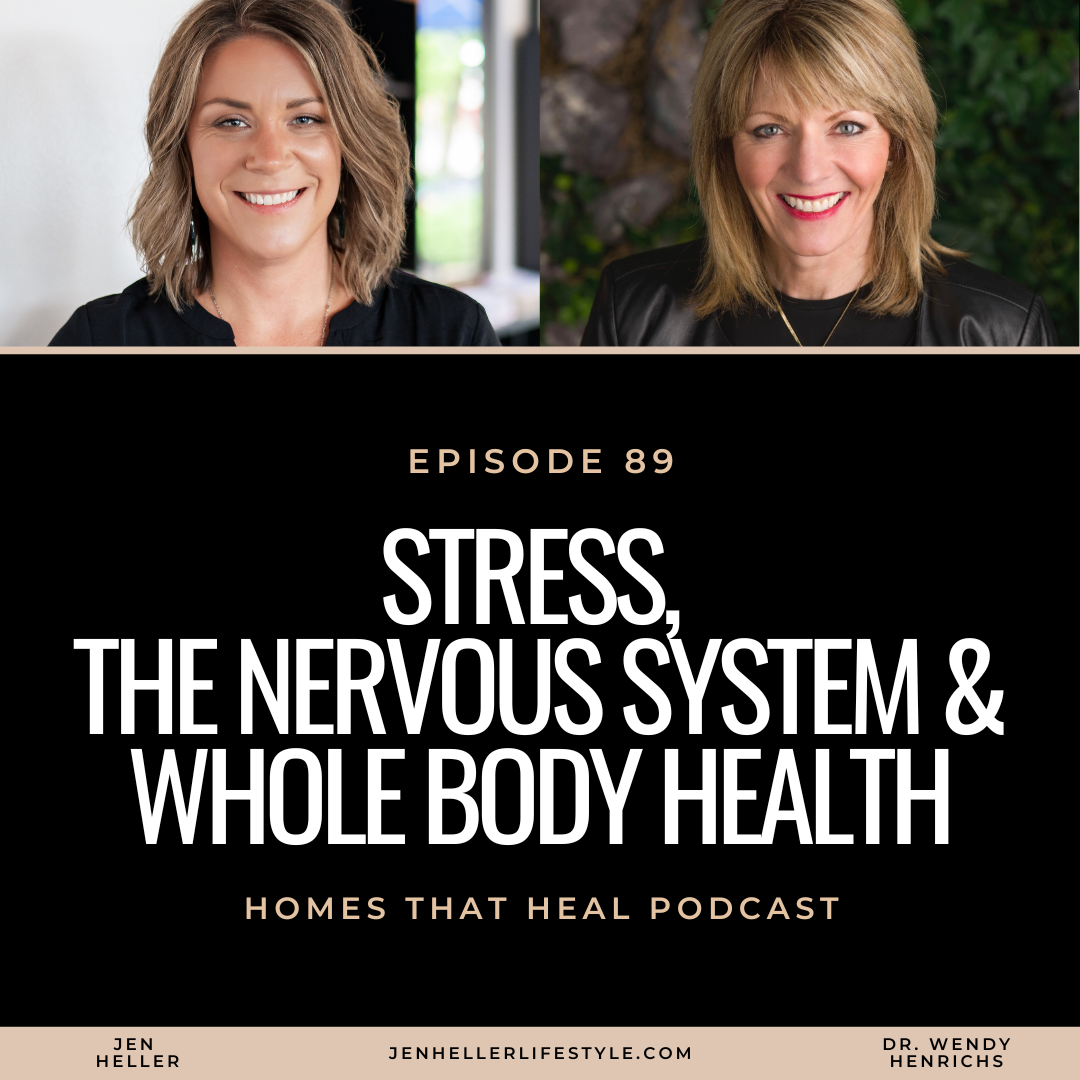
Stress, the Nervous System & Whole Body Health with Dr. Wendy Henrichs
February 24, 2026
You know that feeling when you’re constantly running on empty? When your body’s sending you signals—fatigue, brain fog, hormonal chaos—but you can’t quite figure out why nothing’s getting better?
Here’s what most of us don’t realize: the nervous system and whole body health are completely intertwined. Your nervous system isn’t just about nerve pain or back issues. It’s the master control center running the whole show—your energy, your hormones, your ability to heal.
And when chronic stress keeps your nervous system stuck in overdrive? The rest of the body pays for it.
In this episode, I sat down with Dr. Wendy Henrichs, a chiropractor with 32 years of experience, to talk about how the nervous system works, why stress wreaks havoc on our health, and what we can do to support our bodies from the inside out.
Understanding the Nervous System and Whole Body Health
Let’s start with the basics—because this is where it gets really fascinating.
Dr. Wendy explained that when conception happens, the very first thing that develops in your body is your nervous system. Before your heart, before your lungs, before anything else—your nervous system forms first as the neural tube.
From a Western medicine perspective, that’s your brain, spine, and all the nerves branching out through your body. From an Eastern medicine lens, it’s called the conception vessel—the energetic pathway that runs through your entire being.
And from that foundation, everything else develops. Your organs, your tissues, your whole body structure—all of it stems from that original nervous system blueprint.
Dr. Wendy puts it this way: “We function from above down, inside out.”
Translation? Your brain and nervous system are calling the shots. They’re sending signals to every cell, organ, and system in your body. When those pathways are clear and functioning well, your body can heal itself, regulate itself, and thrive.
But when there’s interference—physical stress, emotional stress, structural strain—those signals don’t transmit as clearly. That’s when symptoms begin to surface.
How Chronic Stress Impacts Your Nervous System
Here’s the thing about stress: your body doesn’t know the difference between a tiger chasing you and an overflowing inbox.
When you’re stressed, your sympathetic nervous system kicks into gear. That’s your fight-or-flight response. Your heart rate goes up, your blood pressure rises, digestion shuts down, and all your body’s resources get redirected toward survival.
Which is great if you’re actually running from danger. Not so great when you’re living in that state day after day, month after month.
Stress itself isn’t the enemy. Acute stress builds resilience. It’s chronic, unrelenting stress without recovery that creates problems.
Dr. Wendy explained that when your nervous system is chronically stuck in fight-or-flight, healing becomes much more difficult. It’s too busy trying to survive.
“When you’re in that sympathetic state, your body’s not focused on repairing tissues or balancing hormones,” she said. “It’s focused on getting you through the next crisis—even if that crisis is just checking email.”
And over time? That chronic stress starts showing up as real, physical symptoms.
Fatigue. Brain fog. Hormonal imbalances. Digestive issues. Inflammation. Weakened immune function.
All of it ties back to a nervous system that’s been stuck in overdrive for way too long.
The Parasympathetic Nervous System: Your Body’s Healing Mode
So if the sympathetic nervous system is your gas pedal, the parasympathetic nervous system is your brake.
It’s the rest-and-digest mode. The state where your body can actually heal, repair, and restore itself.
But here’s the problem: most of us aren’t spending nearly enough time there.
Dr. Wendy talked about how critical it is to activate that parasympathetic state—and how things like chiropractic adjustments, meditation, deep breathing, and even just slowing down can help shift your body out of stress mode.
“When we remove interference from the nervous system through adjustments, we’re helping the body get back into that healing state,” she explained. “We’re clearing the roadblocks so the body can do what it’s designed to do.”
Think of it like snow plowing the roads. When the pathways are clear, everything can flow. Energy moves freely. Signals get through. Your body can communicate with itself the way it’s supposed to.
But when those pathways are blocked—whether from physical misalignments, emotional stress, or lifestyle factors—everything gets backed up. And that’s when symptoms start piling up.
Nervous System Health Affects Everything—Including Hormones and Energy
One of the things that really struck me in this conversation was how deeply connected the nervous system is to everything else in the body.
Your hormones? Regulated by signals from your brain.
Your energy levels? Controlled by your nervous system’s ability to manage stress and recovery.
Your immune function? Directly impacted by whether you’re spending time in rest-and-digest mode or constantly stuck in fight-or-flight.
Dr. Wendy shared that in her practice, she’s seen people’s lives completely change—not just their back pain, but their sleep, their digestion, their hormones, their mental clarity—all because they started addressing the root issue: nervous system dysfunction.
“We’re not just treating symptoms,” she said. “We’re helping the body function better at a foundational level.”
And that’s the piece so many of us miss. We’re out here chasing solutions for fatigue, for brain fog, for hormonal chaos—but we’re not looking at the system that’s actually running the show.
How Your Thoughts and Emotions Impact Physical Health
Here’s where things get even more interesting.
Dr. Wendy and I talked about the work of Dr. Joe Dispenza, who studies how our thoughts and emotions literally change our biology.
When you’re stuck in negative thought patterns—stress, worry, fear—your body responds accordingly. Your nervous system stays in fight-or-flight. Stress hormones stay elevated. Your body stays in survival mode.
But when you shift your thoughts toward love, gratitude, peace, and joy? Your body responds to that too.
Dr. Wendy explained it beautifully: “When you think about how you want to feel and you pair it with an elevated emotion—love, joy, peace—you’re signaling your body to shift. You’re literally changing your energy, and that changes your physical body.”
She referenced Einstein’s famous equation: E=MC². Energy equals mass times the speed of light squared.
We are both sides of that equation. We’re physical beings (mass) and energetic beings (energy). And our thoughts—especially when driven by love—move at the speed of light.
When you visualize how you want to feel and pair it with gratitude or calm, you’re sending different signals through your nervous system. And over time, that can shift your physiology.
But here’s the key: your body has to be clear of interference for that transformation to happen.
That’s where chiropractic care, good nutrition, quality sleep, movement, and stress management all come in. You’re creating the conditions for healing. You’re clearing the pathways so your body can actually respond to the higher frequencies you’re trying to tap into.
Supporting Your Nervous System and Whole Body Health
So what can you actually do to support your nervous system and shift out of chronic stress?
Dr. Wendy’s advice was simple but powerful:
- Start your day with intention. Think about how you want to feel. Visualize yourself already living that reality. Pair it with gratitude and love.
- Move your body. Get outside. Get some sunlight. Let your body move in ways that feel good.
- Nourish yourself well. Food is information. What you put into your body matters.
- Remove physical interference. If you’re dealing with misalignments or restrictions in your spine, chiropractic adjustments can help clear those pathways and restore function.
- Prioritize rest. Quality sleep is when your body does most of its healing and repair. Make it non-negotiable.
- Practice stress resilience. When stress comes up (because it will), take a deep breath. Decide that you don’t want to let it hijack your nervous system. Choose peace. Choose joy. Choose love.
It’s not about being perfect. It’s about creating moments throughout your day where your body can drop into that parasympathetic healing state.
Even just a few minutes of deep breathing, a short walk outside, or a moment of gratitude can signal your nervous system to shift out of fight-or-flight and into rest-and-restore.
The Big Takeaway: You Have Everything You Need Inside You
Dr. Wendy’s closing words really stuck with me:
“You have everything inside of you to be healthy, well, vital, full of energy. Sometimes you just need a little help activating it—through chiropractic, through meditation, through your diet, or a combination of things. But know that your body is amazing, and you have everything already inside of you to be well, healthy, wise, vital, and live a long time. Not just living, but a life really well lived.”
That’s the truth so many of us forget when we’re stuck in the weeds of chronic symptoms and endless doctor visits.
Your body isn’t broken. It’s communicating. It’s adapting, doing the best it can with the input it’s receiving.
And when you support your nervous system—when you clear the interference, reduce the stress, and create the conditions for healing—your body knows exactly what to do.
Because the nervous system and whole body health aren’t separate things. They’re completely intertwined. And when you take care of one, you take care of both.
Dr. Wendy Henrichs Bio:
Dr. Wendy Henrichs is a Board Certified Chiropractic Pediatrician and Nutrition Counselor who has practiced with her husband Scott since 1994. She specializes in Women’s Health and Pediatrics and has a special interest in pregnancy and newborn/infant care. They utilize cold laser, PEMF, vibration therapy, therapeutic exercises and 3×4 Genetic testing in their diverse practice.
Dr. Wendy is active in her community and profession. She served for six years as a Director and Treasurer on the Wisconsin Chiropractic Association board. She also served for 10 years on the Wisconsin Chiropractic Examining Board and was the Chairperson for five of those years. Dr. Wendy was the 2012 Wisconsin Chiropractor of the Year, an award she received for her work to improve the standards of care for chiropractic patients in Wisconsin. She co-developed the Fit for Life fitness and body transformation program offered by the YMCA of the Northwoods. Dr. Wendy served on the YMCA of the Northwoods Board of Directors for 14 years and was the CVO for five years. She currently serves on the YMCA of the Northwoods Executive committee. Dr. Henrichs led the development of the Worksite Wellness grant program for Oneida County, educating employers on how to implement the program in their business. She has received numerous awards for her volunteerism in the Northwoods area.
Dr. Wendy Henrichs has lectured extensively on a diverse range of topics related to pediatrics, women’s health, nutrition, cold laser, and exercise. She is known for her dynamic and informative speaking style. Dr. Wendy is the author of Shift in Health, a series of blog articles and tips to make simple changes in your life to help you live better.
Contact Dr. Wendy Henrichs
- Timberland Chiropractic: www.timberlandchiropractic.com
- Shift in Health Articles: https://timberlandchiropractic.com/blog/
- Dr. Henrichs on Facebook: https://www.facebook.com/wendy.henrichs.7
Resources & Links
- Take a peek at my Jen Recommends list to see more of my favorite products.
- Grab my FREE Home Wellness Checklist here for more tips.
Be the first to know about my new favorite wellness tools, special deals, and more, subscribe to our newsletter!
Disclaimer: This podcast is for general information purposes only and does not constitute the practice of medicine, nursing, or other professional health care services. The statements and views expressed are not medical advice and are not meant to replace the advice of your medical doctor. This podcast, including Jen Heller and her guests, disclaims any responsibility and any adverse effects you may experience from the specific use of the information contained herein. The opinions of guests are their own and this podcast does not endorse or accept responsibility for the statements made by guests. The content of this podcast is not intended to be a substitute for professional medical advice, diagnosis, or treatment. If you think you have a medical condition, consult your licensed physician.


