
Back to Basics Healing: Food, the Nervous System & Nature
February 10, 2026
If you’ve been doing “all the right things” but still feel anxious, exhausted, or disconnected from your body, you’re not alone. More importantly, you’re not broken. Often, what we’re really craving isn’t another protocol or productivity hack, but nervous system healing. And the path there is usually far simpler—and more human—than we’ve been led to believe.
In a world that celebrates pushing harder and moving faster, getting back to basics invites us to slow down and return to nourishing food, time in nature, and daily rhythms that help the body feel safe again. When we support the nervous system first, everything else, including mental health, emotional resilience, digestion, sleep, and even joy, has a chance to follow.
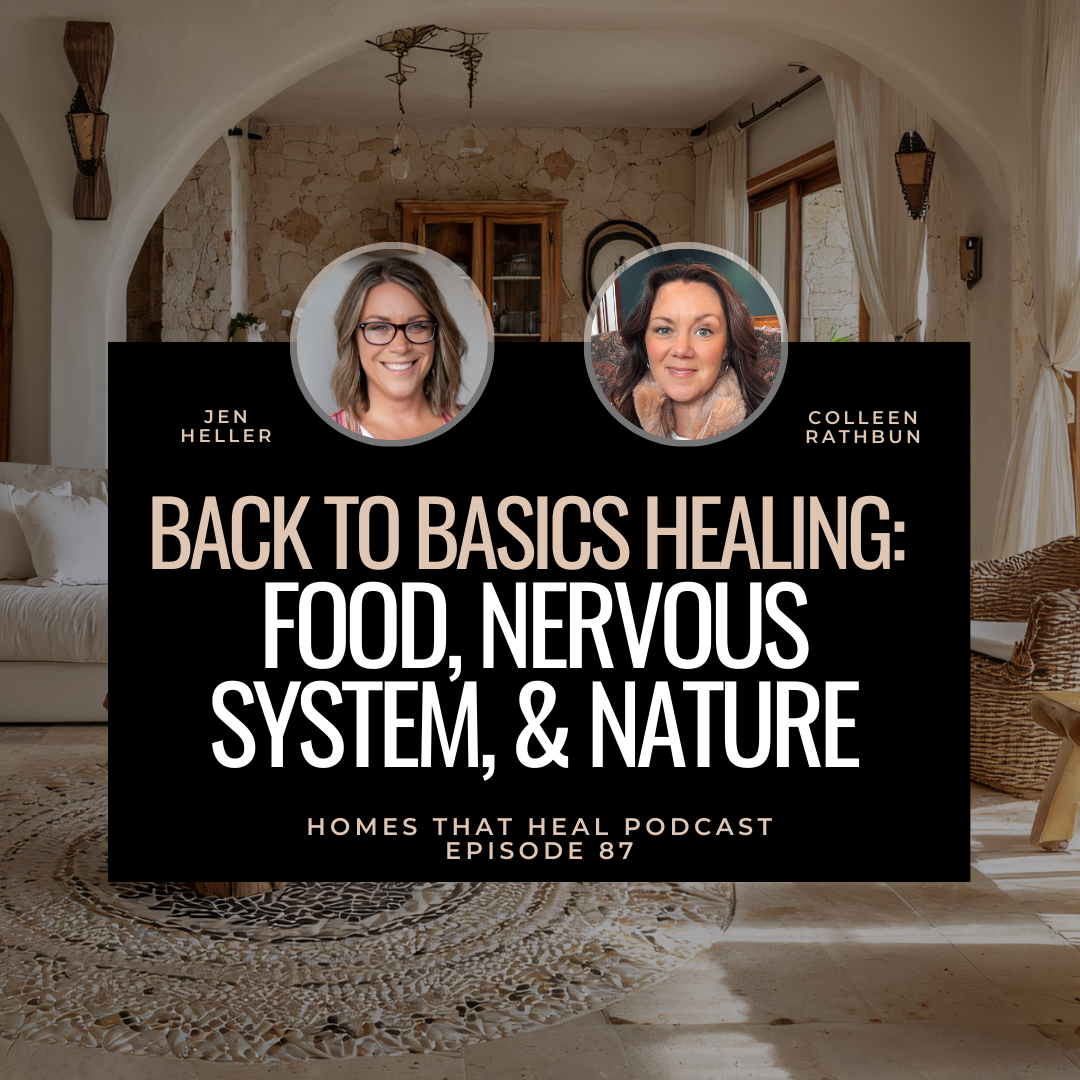
This is the heart of what we explored in Homes That Heal Episode 87, and it’s a conversation worth lingering with.
Why Nervous System Healing Is the Missing Piece
A lot of people find their way to healing work because they’re struggling with anxiety, burnout, depression, or chronic stress. They’ve tried supplements, therapy, workouts, and mindset shifts, but something still feels off.
That’s because healing doesn’t happen in isolation. The nervous system sets the tone for the entire body.
When the nervous system is stuck in fight-or-flight:
- Digestion suffers
- Hormones become dysregulated
- Blood sugar becomes unstable
- Sleep quality declines
- Emotional reactivity increases
You can eat the “perfect” diet and still feel awful if your nervous system doesn’t feel safe.
Nervous system healing isn’t about fixing yourself—it’s about creating the conditions where your body can do what it was designed to do.
Nervous System Healing Starts with Safety, Not Willpower
One of the most misunderstood aspects of nervous system healing is the role of safety.
Safety isn’t just about logic. It’s biological.
When your nervous system perceives danger—whether from chronic stress, unresolved trauma, over-scheduling, under-eating, or even constant noise—it shifts into protection mode. And in protection mode, healing takes a back seat.
This is why so many people feel stuck despite their best efforts. The body isn’t resisting healing. It’s prioritizing survival.
Healing begins when the nervous system receives consistent signals of safety:
- Predictable meals
- Gentle routines
- Supportive environments
- Rest without guilt
- Connection—to people, nature, and your body
That’s where food and nature come in.
Food as a Foundation for Nervous System Healing
We often separate mental health from nutrition, but the body doesn’t work that way. Food is information, and the nervous system is always listening.
Nutrition for Mental Health and Nervous System Support
Neurotransmitters like serotonin, dopamine, and norepinephrine don’t appear out of thin air. They’re built from nutrients—especially protein, healthy fats, vitamins, and minerals.
When nourishment is inconsistent or inadequate:
- Blood sugar fluctuates
- Cortisol rises
- Anxiety symptoms increase
- Focus and mood decline
Many people mistake blood sugar crashes for anxiety. The symptoms can look identical:
- Shakiness
- Racing heart
- Sweating
- Irritability
- Brain fog
Supporting nervous system healing often begins with something surprisingly simple: eating enough, and eating regularly.
Blood Sugar Balance and the Nervous System
Blood sugar regulation is one of the most overlooked pieces of nervous system healing.
Skipping meals, relying on caffeine, or under-eating—especially protein—keeps the body in a stress response. The nervous system doesn’t interpret this as discipline. It interprets it as danger.
Simple, supportive steps include:
- Eating protein at breakfast
- Pairing carbohydrates with fats and protein
- Avoiding long gaps between meals
- Listening to hunger cues without judgment
These aren’t diet rules. They’re safety signals.
Nature as a Regulator for the Nervous System
Humans weren’t designed to live under fluorescent lights, surrounded by concrete, screens, and constant noise. Nature is one of the most powerful tools for nervous system healing—and it’s free.
Why Nature Calms the Nervous System
When we encounter beauty—trees, water, birdsong, sunlight—the brain receives a signal that we’re not under threat. If danger were present, we wouldn’t have the capacity to notice beauty.
Nature helps:
- Lower cortisol
- Slow the heart rate
- Improve mood
- Increase emotional regulation
- Support parasympathetic (rest-and-digest) activation
Even short, consistent exposure matters.
Grounding and Nervous System Healing
Physically connecting with the earth through grounding has been shown to support nervous system regulation by reducing inflammation and promoting calm.
Grounding doesn’t have to be extreme:
- Walking barefoot on grass or sand
- Sitting outside with your feet on the ground
- Gardening
- Leaning against a tree
- Taking a slow walk without headphones
These practices gently remind the body that it’s supported.
Healing Happens in Phases (and That’s Normal)
One of the most compassionate reframes in nervous system healing is understanding that healing happens in phases.
We live in a culture that wants instant results. But the body works in seasons.
There are times for:
- Stabilizing
- Detoxing
- Resting
- Rebuilding
- Integrating
Trying to rush from survival straight into thriving often backfires. Nervous system healing requires patience, consistency, and self-trust.
Just like recovering from surgery, there’s preparation, rest, rehabilitation, and strengthening. Each phase matters.
Nervous System Healing Is a Daily Practice, Not a Destination
Healing isn’t something you achieve once and check off a list. It’s something you practice.
Small, repeated choices create safety over time:
- Eating when you’re hungry
- Stepping outside daily
- Saying no when your body needs rest
- Creating slower mornings
- Letting go of perfection
These choices may seem insignificant, but to the nervous system, they’re everything.
A Holistic View of Mental Health and the Nervous System
Mental health isn’t just about thoughts. It’s about the environment your thoughts live in.
When we approach mental health holistically—through food, nature, rest, relationships, and rhythm—we stop fighting the body and start working with it.
Nervous system healing bridges the gap between mental, physical, emotional, and spiritual well-being.
It invites us back into a relationship with ourselves.
The Takeaway: Healing Doesn’t Have to Be Complicated
If there’s one message to carry forward, it’s this: You don’t need to do more to heal, you need to support your nervous system better.
Healing often begins with:
- A nourishing meal
- A walk outside
- A deep breath
- A slower pace
- A kinder inner voice
Back-to-basics healing isn’t a step backward. It’s a return to wisdom your body has always known.
Colleen Rathbun Bio:
Colleen Rathbun is a board-certified wellness coach, registered nurse, wife, mom, and stepmom who believes healing and humor go hand in hand. With over two decades of experience in behavioral health—both inpatient and outpatient—Colleen brings a deeply compassionate, real-world approach to emotional and nervous system healing.
Through her coaching practice, Colleen helps individuals untangle stress, regulate emotions, and strengthen coping skills while reconnecting with what truly nourishes them—mind, body, and soul. She believes joy is medicine, laughter belongs in the healing process, and that small, soul-aligned choices made consistently can create meaningful transformation over time.
Colleen is also trained in Restoring the Foundations, a Bible-based ministry that supports healing from generational trauma, unhelpful belief patterns, and soul-level wounds. She is deeply passionate about helping others release old patterns, rebuild their energy, and realign with the person God created them to be.
Contact Colleen:
- Instagram: @colleen_healingroots
- TikTok: @colleen.healingroots
- Use code home10 to save 10 percent on group or individual coaching
Resources & Links
- Take a peek at my Jen Recommends list to see more of my favorite products.
- Grab my FREE Home Wellness Checklist here for more tips.
Be the first to know about my new favorite wellness tools, special deals, and more, subscribe to our newsletter!
Disclaimer: This podcast is for general information purposes only and does not constitute the practice of medicine, nursing, or other professional health care services. The statements and views expressed are not medical advice and are not meant to replace the advice of your medical doctor. This podcast, including Jen Heller and her guests, disclaims any responsibility and any adverse effects you may experience from the specific use of the information contained herein. The opinions of guests are their own and this podcast does not endorse or accept responsibility for the statements made by guests. The content of this podcast is not intended to be a substitute for professional medical advice, diagnosis, or treatment. If you think you have a medical condition, consult your licensed physician.


