
Homes That Heal — A Year in Review
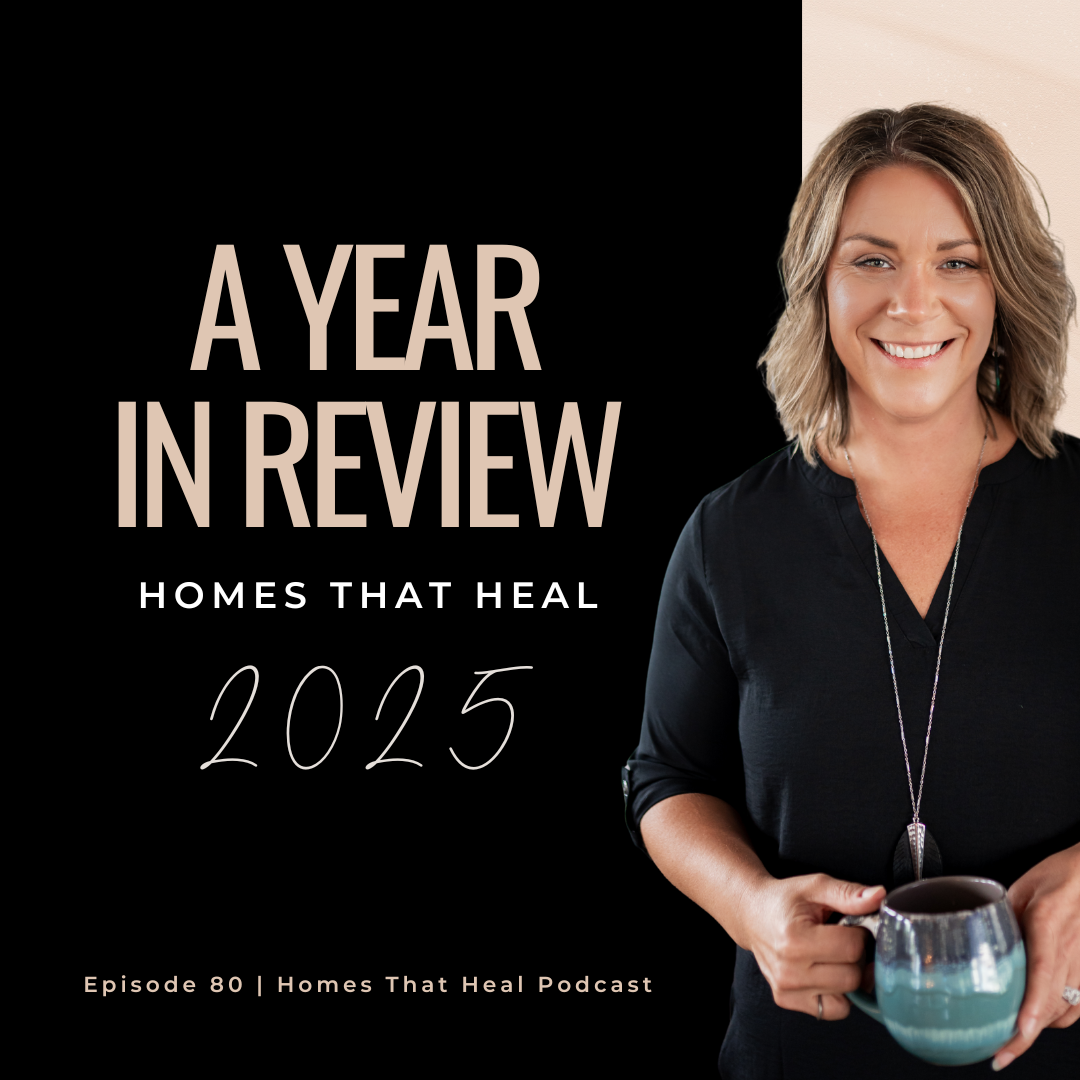
December 23, 2025
If there’s one thing this past year reinforced, it’s this: a home that heals isn’t about perfection, square footage, or checking off another to-do list. It’s about creating a place that can hold you—especially when life asks more of you than you expected.
This year was full. Beautiful. Stretching. It included milestones worth celebrating, quiet seasons that demanded patience, and deeply personal moments that reminded me why the idea of a home that heals matters so much—not just in theory, but in real life.
What follows isn’t a highlight reel. It’s a grounded reflection on what it truly means to create a home that supports healing, growth, and resilience.
What a Home That Heals Really Means
The phrase gets used a lot—and for good reason. But over the last year, my understanding of it deepened in ways I couldn’t have planned.
A home that heals isn’t just about wellness tools or beautiful design (though those can absolutely support the process). At its core, it’s about how a space makes you feel when you walk through the door.
- Does it invite your nervous system to soften?
- Does it allow rest without guilt?
- Does it feel safe enough for honest conversations and real emotions?
A home that heals becomes a container—one that steadies you when things feel uncertain and supports you when life shifts unexpectedly.
The Year That Tested the Foundation
This past year brought growth—but not the flashy kind. It was the kind that happens behind the scenes, where priorities get rearranged and capacity looks different than it used to.
There were moments when slowing down wasn’t optional—it was the work. Showing up differently wasn’t a failure; it was a form of care. And protecting peace became less about saying yes and more about knowing when to say no.
When a Home That Heals Shows Its Power
One of the biggest lessons I learned is that a home that heals shows its true power during hard seasons—not after them.
A healing home:
- Holds space for grief, confusion, and uncertainty
- Allows routines to flex without falling apart
- Supports connection instead of pressure
- Makes room for restoration without explanation
It’s easy to talk about healing when things are going well. It’s another thing entirely to experience it in real time when the season is tender.
Community, Conversations, and Connection
One of the most meaningful parts of this year was continuing the conversations that happen through the Homes That Heal Podcast. Reaching listeners across the globe is humbling, but what matters most isn’t the numbers—it’s the connection.
Meaningful conversations create healing too. They remind us we’re not alone, they normalize struggle, and they give language to the experiences we may not yet have words for.
Why Honest Conversations Matter in a Home That Heals
Healing homes don’t avoid hard topics—they make space for them.
Whether it’s mental health, family dynamics, recovery, or simply learning how to rest again, healing requires honesty. And honesty thrives in environments that feel safe and grounded.
This year reaffirmed that the conversations we have—both publicly and privately—shape the energy of our homes more than we realize.
Travel, Space, and Perspective
Travel has always been one of my love languages. This year reminded me why stepping outside our usual environment can be such a powerful reset.
Travel offers perspective. It expands the nervous system in a different way. It allows us to come home with fresh eyes—not just to our houses, but to our lives.
Interestingly, the more grounded my travels felt, the more I appreciated the sanctuary of home. That balance—between exploration and restoration—is part of what makes a home that heals so impactful.
Creating a Home That Heals Isn’t About Doing More
One of the biggest misconceptions about creating a home that heals is that it requires adding more. More products, more routines, more effort.
In reality, healing often comes from simplifying.
Practical Ways to Support a Home That Heals
Here are a few gentle, lived-in practices that supported healing this year:
- Protecting quiet: Reducing noise, screens, and unnecessary stimulation
- Honoring rhythms: Letting routines shift when energy changes
- Creating comfort: Spaces that invite rest without productivity attached
- Supporting sleep: Prioritizing rest as a foundation, not a reward
- Designing with intention: Choosing materials and layouts that feel grounding
None of these require perfection. They require presence.
Mental Health, Family, and the Role of Home
This year reinforced something I’ve long believed: the home plays a powerful role in mental and emotional wellbeing.
A home that heals doesn’t fix everything—but it can make the work possible.
It can be a place where someone feels anchored enough to rebuild. A home can support nervous system regulation when the world feels overwhelming. It can quietly reinforce safety, consistency, and care.
A home that heals doesn’t force transformation. It allows it.
Looking Ahead: What’s Next
As this year closes, there’s a sense of steadiness—not because everything is figured out, but because the foundation is strong.
Looking ahead, the mission remains the same:
- To explore what it really means to create a home that heals
- To have honest conversations about health, environment, and wellbeing
- To share lived experience alongside education and curiosity
There’s more to come—deeper conversations, expanded ideas, and new ways to support healing at home.
A Gentle Invitation
If there’s one takeaway from this year, it’s this:
Healing doesn’t always look like progress. Sometimes it looks like staying. Resting. Holding steady.
A home that heals doesn’t demand constant improvement. It meets you where you are—and walks with you from there.
If you’re in a season of reflection, transition, or quiet rebuilding, know this: your home has the potential to support you more than you may realize.
And sometimes, that’s more than enough.
Resources
- Check out my website for more infrared sauna info
- Take a peek at my Jen Recommends list to see more of my favorite products.
- Grab my FREE Home Wellness Checklist here for more tips.
- Cathy Heller membership mentioned in episode
Be the first to know about my new favorite wellness tools, special deals, and more, subscribe to our newsletter!
Disclaimer: This podcast is for general information purposes only and does not constitute the practice of medicine, nursing, or other professional health care services. The statements and views expressed are not medical advice and are not meant to replace the advice of your medical doctor. This podcast, including Jen Heller and her guests, disclaims any responsibility and any adverse effects you may experience from the specific use of the information contained herein. The opinions of guests are their own and this podcast does not endorse or accept responsibility for the statements made by guests. The content of this podcast is not intended to be a substitute for professional medical advice, diagnosis, or treatment. If you think you have a medical condition, consult your licensed physician.


