Whole Body Vibration for Bone Density, Strength & Recovery
September 22, 2026
Whole body vibration came into my life after a stroke, and it never left. All these years later, it’s still one of my go-to tools for strength, recovery, and the bone density questions so many of us are asking in midlife.
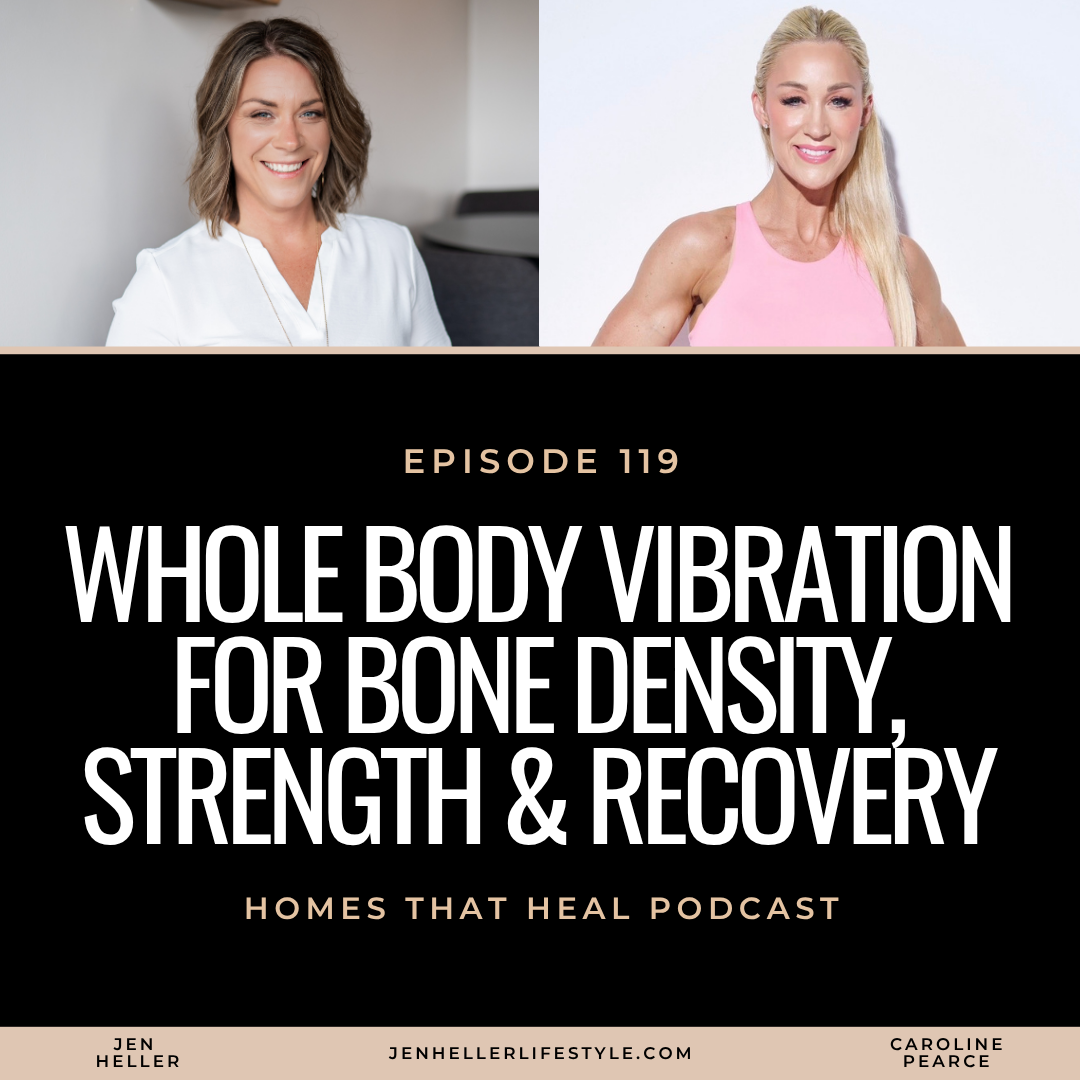
So this week I brought in an expert. Caroline Pearce has spent 20 years as a Master Trainer for Power Plate, and we got into what vibration plates really do, the research behind whole body vibration, and what makes a real Power Plate different from the cheap knockoffs you see everywhere right now.
Meet Caroline Pearce
Before Power Plate, Caroline competed for Great Britain as a heptathlete and a bobsledder. A knee injury sent her looking for a better way to recover, and that search led her straight to whole body vibration.
She’s also an exercise physiologist, a lead trainer for the FitOn app, and a sports broadcaster who currently covers UFC and boxing for TNT Sports. (Fun fact: she also played “Ice” on the UK’s Gladiators.)
How Whole Body Vibration Works
At its simplest, whole body vibration is a platform that vibrates in tiny, rapid movements while you stand, stretch, or move on top of it. On a quality machine, that vibration is small enough that someone watching from across the room might not even notice it. But your muscles notice.
When your muscles feel that vibration, tiny sensors called muscle spindles fire a signal through your nervous system, and your muscles respond with rapid reflex contractions. These aren’t the contractions you control when you decide to do a squat. They happen automatically, dozens of times per second, without you having to think about it.
Most of us only recruit a small percentage of our muscle fibers during everyday movement. Whole body vibration wakes up far more of them at once, which is why nine minutes on the plate can leave you feeling like you did a whole lot more.
How Whole Body Vibration Wakes Up Quiet Muscles
When I had a stroke in my early thirties, my left side went from strong and active to barely responsive. My leg dragged, and my hand curled into a fist I couldn’t open. The strength was technically still in there, but the signal from my brain to those muscles had gone quiet.
A friend with a chiropractic office next door had a Power Plate, and she suggested I simply try standing on it. So that’s what I did. Every single day, I’d walk over and stand on that plate for ten minutes, focusing on my left side, letting the vibration do what my brain couldn’t quite tell my muscles to do.
This was my experience, not a prescription, and I had plenty of other support in place too. Still, I credit that daily habit as one of the reasons my muscles didn’t atrophy the way they could have. The research supports the general idea, too: whole body vibration has been studied as a way to support balance and muscle activation in stroke recovery, and it’s considered a low-impact, generally safe option.
Whole Body Vibration and Bone Density
Caroline shared that some of the earliest work on vibration training came out of space programs, where astronauts lose bone and muscle at an alarming rate in zero gravity. Vibration helped them hold onto more of both, which is a wild origin story for a piece of home equipment.
Building Bone in Perimenopause Without Heavy Weights
A lot of us hit the same wall in midlife. To build bone density the traditional way, you generally need to lift fairly heavy weights, because bone gets stronger when it’s loaded and stressed. But heavy lifting isn’t realistic or safe for everyone, especially once perimenopause brings along stiff joints or a cranky shoulder.
Caroline explained that the plate creates loading on the bone through vibration, without the pounding impact or the heavy barbell. You hold a squat, a lunge, a simple position, and the machine does a good chunk of the work for you.
Studies on whole body vibration and bone density have been encouraging, particularly for postmenopausal women, and some show modest improvements in bone mineral density with consistent use. That said, most experts still see it as a helpful addition to an overall routine, rather than a stand-alone fix. Consistency is everything here, and results tend to show up over months, not days.
More Than Bone: Hormones, Cortisol, and Everyday Recovery
Bone density gets the headlines, but the hormone benefits are just as useful. Caroline pointed out that whole body vibration may naturally support the release of hormones we need more of as we age, including testosterone and human growth hormone. At the same time, when it’s used in a gentle, moderate way, it’s been associated with lower cortisol, our main stress hormone.
Back when I was running miles a day, losing the ability to move the way I wanted was hard on my head, not just my body. Getting on the plate for ten minutes handed me back that after-workout calm and set up my whole day. Caroline would tell me that is my cortisol responding, and I believe her, because I could feel it.
There’s also research on whole body vibration and visceral fat, the deeper belly fat that wraps around our organs and drives so much of our health risk. Caroline is careful to say it works alongside eating well and moving your body, not instead of those things.
How to Spot a Real Vibration Plate (Not a Shaky One)
If this post has you eyeing a vibration plate, make sure to do your due diligence first. The market is flooded with cheap plates right now, and a lot of them just shake you side to side like a wobble board. Caroline calls them “shaky plates,” and they’re a completely different animal from a quality machine. Without that small, vertical, up-and-down movement, they can’t create the reflex muscle contractions that give you the real benefits.
Worse, some of the cheap, high-intensity ones can jostle your body right out of alignment. I’ve talked with one person who threw off their pelvis because she figured more shaking meant better results. It doesn’t.
What you’re looking for is smooth, harmonic vibration, a small vertical movement measured in a millimeter or two, at a frequency that works with your body instead of against it. A well-made plate feels therapeutic and steady, never jarring. If it’s rattling you around, that’s your sign to step off.
Bite-Sized Wellness You Can Do at Home
You don’t need an hour or a gym full of equipment. You need a few minutes and a little consistency.
Caroline’s rule of thumb: whatever you’d do on the floor, do it on the plate instead. Stretch on it to warm up, hold a squat or a lunge to build strength, and at the end of a long day, lay a tired lower back or tight calf across it to help flush out tension. Same movements, more return.
I like to stack mine with the rest of my routine, too. Some mornings I’ll do my nine minutes on the plate before I step into my infrared sauna, so I’m already warm and my lymph is moving. Other days I pair it with cold therapy or my red light. Caroline had a good word for this kind of habit-stacking: bio-optimization. Fancy term, simple idea. You’re layering small, doable things instead of trying to carve out one giant block of time.
And on the days you’re completely wiped out? Just sit on it. Some of my favorite sessions have been nothing more than sitting on the plate for a couple of minutes, letting my body wake up. My sacred Sundays are made for exactly that kind of restful reset.
The Bigger Picture
Your body wants to heal. Mine did, in ways that still surprise the specialists I work with. Whole body vibration didn’t do that alone, but it’s been one of the most reliable spokes in my wellness wheel for years.
It fits the whole premise of this show, too. Real wellness doesn’t have to happen at a fancy studio across town. So much of it can happen right under your own roof, a few minutes at a time.
Caroline Pearce Bio
Caroline Pearce is a former international heptathlete and bobsled athlete for Great Britain, turned exercise physiologist, sports broadcaster, and health consultant. She holds a first-class honors degree in Sports Science and a master’s in Exercise Physiology, and has spent 20 years as a Master Trainer and ambassador for Power Plate. She’s a lead trainer for the FitOn app, the author of “Better Body Workouts for Women,” and currently reports on UFC and boxing for TNT Sports.
Links & Resources
- Instagram: @carolinepearce
- Caroline Pearce Workouts: fiton.app/caroline
- Power Plate on Instagram: @powerplateusa
- Curious about infrared saunas? Start here: Infrared Sauna Info & Resources
- Take a peek at my Jen Recommends list to see more of my favorite products.
- Grab my FREE Home Wellness Checklist here for more tips.
Be the first to know about my new favorite wellness tools, special deals, and more, subscribe to our newsletter!
Disclaimer: This podcast is for general information purposes only and does not constitute the practice of medicine, nursing, or other professional health care services. The statements and views expressed are not medical advice and are not meant to replace the advice of your medical doctor. This podcast, including Jen Heller and her guests, disclaims any responsibility and any adverse effects you may experience from the specific use of the information contained herein. The opinions of guests are their own and this podcast does not endorse or accept responsibility for the statements made by guests. The content of this podcast is not intended to be a substitute for professional medical advice, diagnosis, or treatment. If you think you have a medical condition, consult your licensed physician.


